


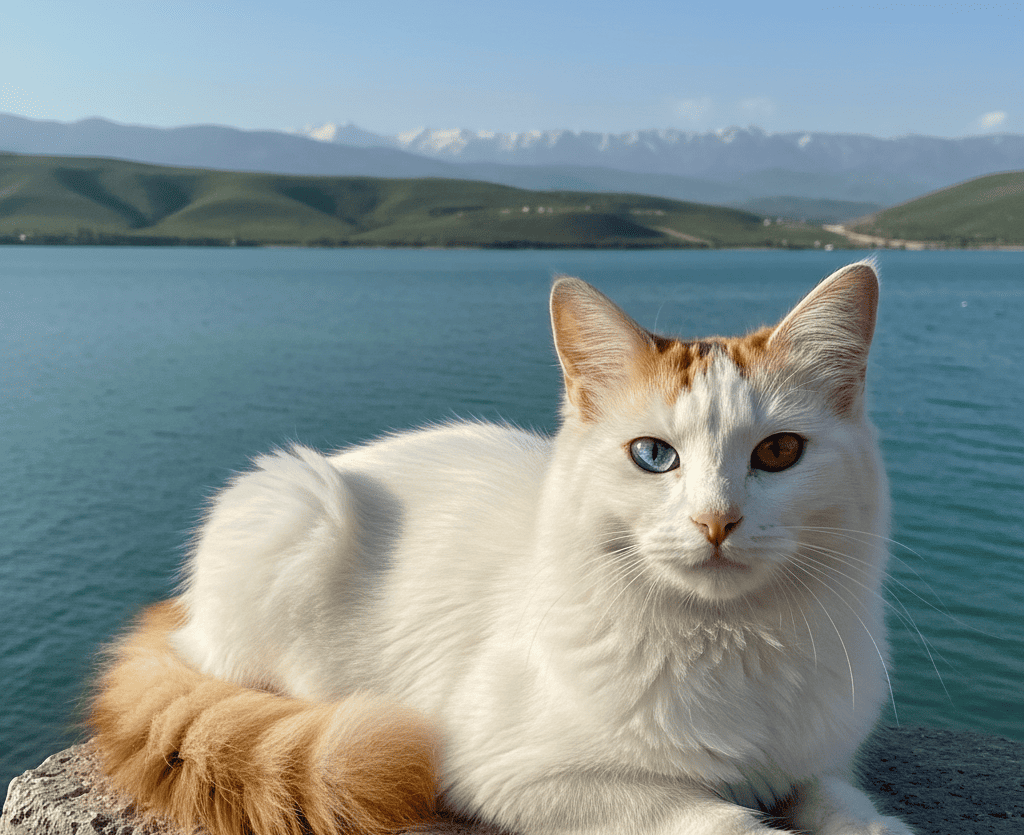
The Van cat, a natural breed originating from the Van Lake Basin in eastern Turkey, is one of the world’s most distinctive feline varieties. Known for its snow-white silky coat and often mismatched eye colors typically one blue and one amber it stands out both with its physical appearance and its expressive, lively personality.
Origin and Historical Background of the Van Cat
The Van cat developed over centuries as a naturally selected breed, shaped by the isolated geography of the Van region. Ottoman-era records reference white, long-haired cats with striking eyes, indicating that this breed has existed in the area for a very long time. Its international recognition began in the mid-20th century when researchers documented the breed and introduced it to global cat organizations. The harsh but clean climate surrounding Lake Van played a significant role in shaping its dense coat, durability, and overall appearance.
Van Cat Physical Characteristics
Eye Structure
The most iconic feature of the Van cat is its eye color. Heterochromia is extremely common in this breed, meaning that one eye is usually blue while the other appears amber or golden. Some individuals have two blue or two amber eyes, but the mismatched-eye appearance remains the hallmark of the breed. The intense contrast in eye color gives the Van cat a powerful and unforgettable expression.
Coat Structure
The Van cat’s coat is silky, airy, and naturally resistant to dirt. Classified as semi-longhaired, its fur thickens during the colder months and becomes lighter in warmer seasons, allowing the breed to adapt easily to varying temperatures. The coat does not feel oily; instead, it has a soft, almost velvety texture. While the breed is primarily known for its pure white coloration, some cats may display subtle cream markings on the head or tail, which are still considered within the breed standard.
Body Structure
With an athletic and well-balanced body, the Van cat moves gracefully yet powerfully. Its broad chest and slightly longer hind legs give it exceptional agility and strong jumping ability. This muscular yet elegant build helps it easily explore high places such as shelves, cabinets, and elevated surfaces within the home. Its confident gait reflects both its physical strength and spirited temperament.
Van Cat Temperament
Intelligent and Quick to Learn
Van cats are extremely observant and mentally sharp. They quickly notice changes in their environment, figure out how toys work, and respond to human cues with impressive awareness. Their curiosity and learning capacity make them highly interactive companions who enjoy mental stimulation.
Affectionate and Communication-Oriented
While they maintain a degree of independence, Van cats enjoy forming strong bonds with their owners. They often choose one person in the household as their favorite and follow them around, initiating interaction through eye contact or gentle vocalizations. They may not always enjoy being held, but they certainly appreciate attention and social engagement.
Energetic and Playful
The Turkish Van cat is full of energy and expresses it through constant exploration and play. High places attract them naturally, and they often turn shelves and furniture into their personal playground. Moving toys instantly capture their attention, and they can chase them tirelessly. At times, they may suddenly leap out from a hiding spot to start a spontaneous game, showing just how lively and spirited their nature truly is.
Living Conditions of the Van Cat
Although Van cats can adapt to apartment living, they thrive in environments where they can stay active and mentally stimulated. Access to climbing areas, engaging toys, and regular human interaction contributes significantly to their overall well-being. They do not enjoy spending long hours alone and may become less motivated if they lack social contact. An active and attentive household provides the ideal lifestyle for this highly social and dynamic breed.
Frequently Asked Questions (FAQ)
Why do Van cats often have different-colored eyes?
This is due to heterochromia, a genetic trait common in the breed. It is completely safe and does not affect their health.
Do Van cats shed a lot?
Their silky coat sheds less than many other semi-longhaired breeds. Shedding may increase during seasonal transitions but is generally manageable.
Are Van cats always pure white?
Most are entirely white, but some individuals may have faint cream markings on the head or tail. These markings are still considered normal for the breed.
Are Van cats good with children?
Yes, they generally get along well with children thanks to their energetic and playful personality. However, careful introductions are recommended with very young children due to the cat’s high energy level.
Do Van cats get along with other cats?
With proper socialization, they can coexist peacefully with other cats. However, they may sometimes display territorial behavior, so gradual introductions work best.

