

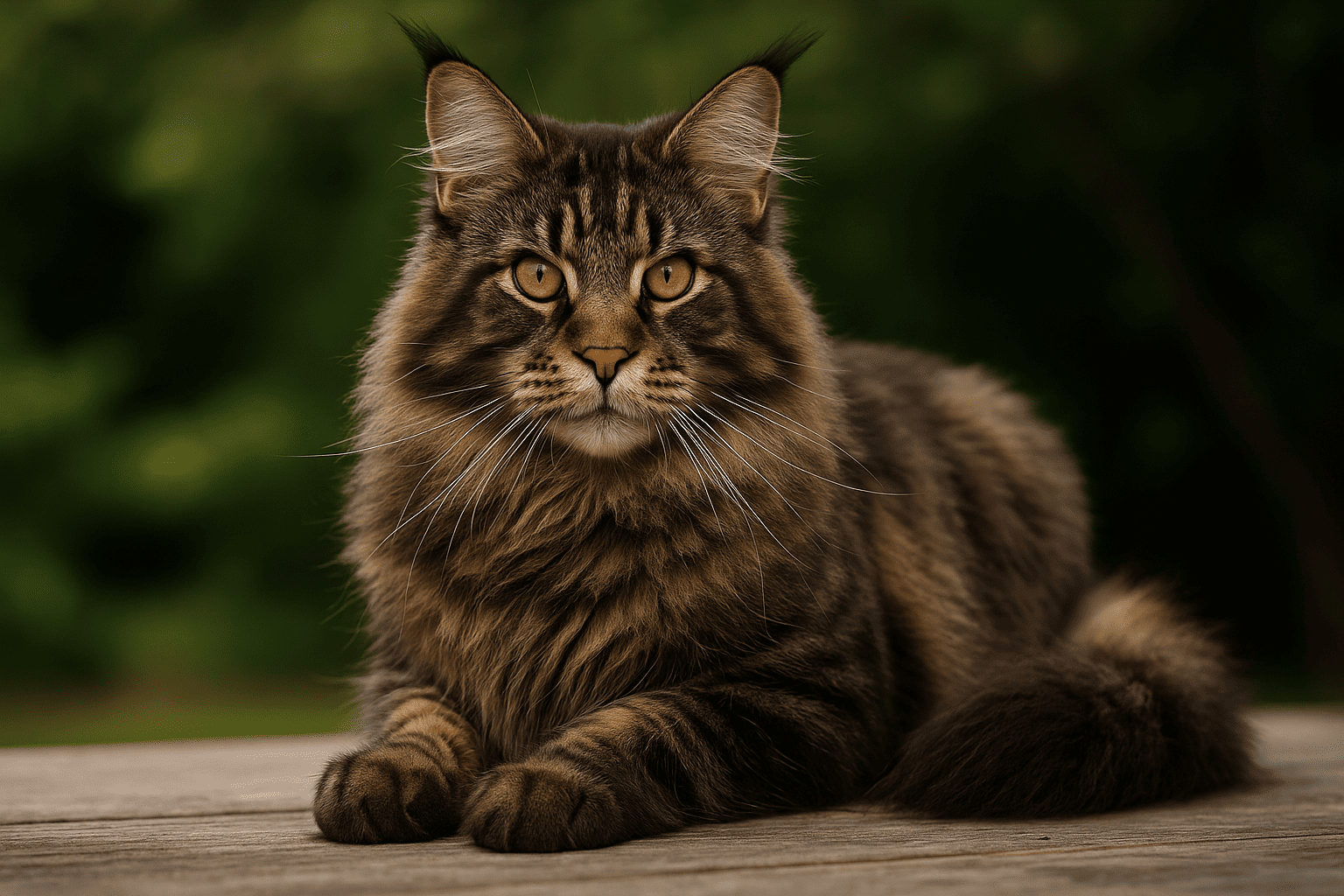
The Maine Coon is one of the oldest natural cat breeds in North America, admired for its impressive size, gentle personality, and striking appearance. Originating from the state of Maine in the United States, this breed has been recognized as the official state cat since 1985 and is often called the Gentle Giant. This content focuses solely on the breed’s history, physical traits, personality, coat characteristics, and breed types without touching on health or care topics.
Origin and History
The history of the Maine Coon blends documented facts with folklore. Although its exact origins remain unclear, it is widely accepted as the oldest longhaired breed native to the American continent.
Most Well-Known Origin Theories
Viking Theory: It is believed that longhaired cats brought by Viking explorers may have contributed to the development of the breed. The Maine Coon’s sturdy build and dense coat resemble Scandinavian forest cats, supporting this idea.
Marie Antoinette Legend: According to a romantic and popular legend, Queen Marie Antoinette’s longhaired cats were shipped to Maine during her attempted escape from France, later contributing to the formation of this breed.
Natural Crossbreeding of Local Cats (Most Accepted Theory): The most credible explanation suggests that local shorthaired cats naturally interbred with longhaired cats brought by European sailors and settlers.
Raccoon Myth (Pure Folklore): Due to their bushy tails, some early settlers believed Maine Coons were a mix between domestic cats and raccoons, a biologically impossible but culturally memorable myth.
The breed was officially listed in CFA’s first studbook in 1908 as “Maine Cats”, and today it is recognized by major cat associations such as TICA and CFA.
Physical Characteristics
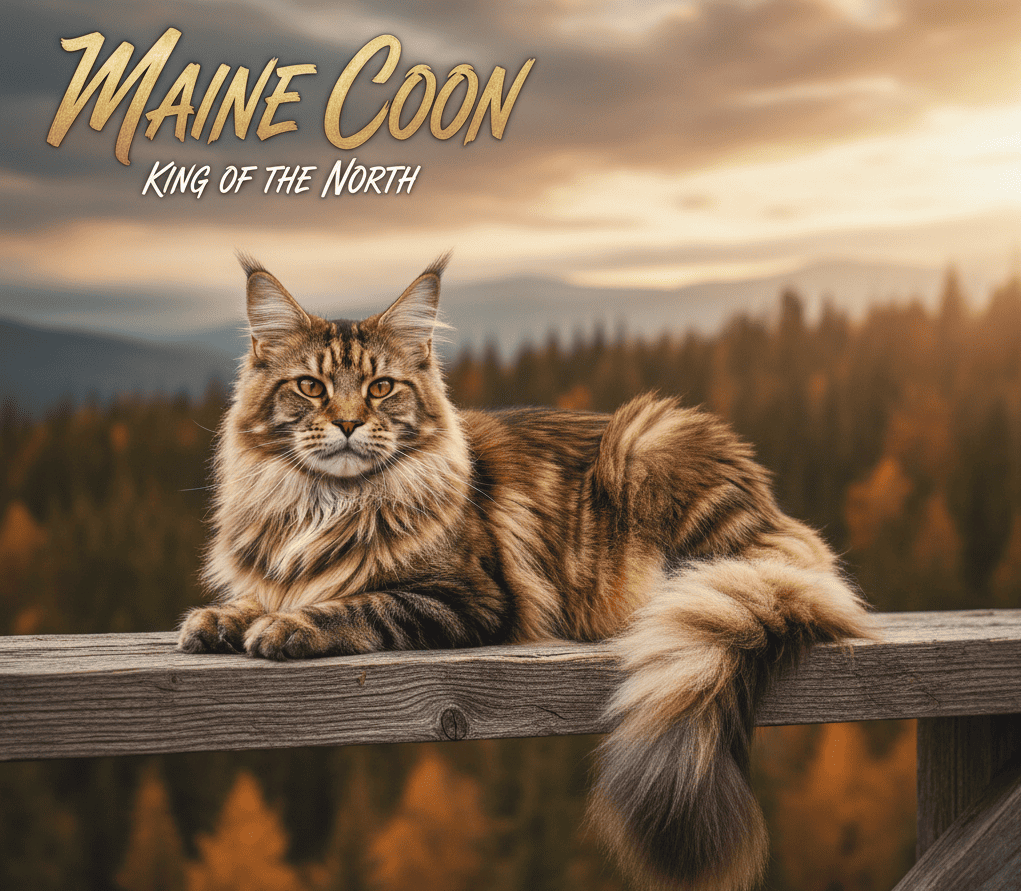
The Maine Coon stands out not only for its size but also for its rectangular body shape, expressive face, prominent ears, and flowing coat.
Size and Structure
Among the largest domesticated cat breeds, males typically weigh between 18 and 22 pounds, sometimes exceeding this range. Females are lighter, usually between 10 and 15 pounds. Their length from nose to tail can approach one meter. They reach full physical maturity between the ages of three and five. Their body is muscular, broad-chested, and strong-boned, reflecting their origins as hardworking farm and ship cats.
Head and Facial Features
They have a square muzzle, high cheekbones, and large, triangular ears often adorned with lynx tips. Their eyes are slightly slanted and expressive, giving them a wild yet gentle look.
Tail and Paws
The tail is long, full, and plume-like, designed to protect against cold climates. Their large paws feature noticeable toe tufts, which historically helped them walk more easily in snow.
Coat Texture and Color Variations
One of the most iconic attributes of the Maine Coon is its luxurious coat. The semi-long, dense, and silky fur is adapted to harsh winters.
Coat Texture Features
The fur is shorter around the shoulders, forming a longer ruff around the neck. The belly and hind legs have noticeably longer fur. The topcoat is water-resistant, while the undercoat is fine and insulating.
Up to 64 Colors and Patterns
This breed comes in an exceptional range of colors, including solid shades, tabby patterns, tortoiseshell variations, smoke and shaded tones, bicolor combinations, and parti-color mixes. Chocolate, lavender, and pointed patterns are not accepted in breed standards.
Eye Colors and Special Genetic Traits
The expressive eyes of the Maine Coon add to its charm. Common colors include green, gold, and copper tones. White-coated individuals may have blue or odd-colored eyes. Blue-eyed white Maine Coons have a higher likelihood of congenital deafness. Polydactyly, the presence of extra toes, is also seen in this breed, giving historical advantages in balance and mobility.
Personality and Behavior Traits
The personality of the Maine Coon is as impressive as its appearance. Known as the “Gentle Giant,” this breed is affectionate but not clingy. They enjoy being near their humans but may not always prefer being held. They are highly intelligent, capable of solving puzzles, and enjoy interactive toys. They get along well with children and other pets. Their distinctive chirping and trilling sounds make their communication style unique.
Maine Coon Types (Appearance-Based Subcategories)
Within the breed, different visual types have emerged depending on breeder preferences. These include purebred, Russian/modern style, American/traditional type, show quality, pet quality, mixed Maine Coon–like cats, polydactyl types, and rescued individuals with typical Maine Coon traits. Each type maintains the general Maine Coon identity while showing slight visual variations.
Frequently Asked Questions (FAQ)
Why is the Maine Coon such a large breed?
Its natural origins contribute to its large structure. Adaptation to colder climates also played a role in developing a strong, big-boned physique.
How can you identify a purebred Maine Coon?
The square muzzle, lynx-tipped ears, rectangular body, and flowing coat are distinguishing traits.
Does the coat mat easily despite being long?
The coat is silky and tends to mat less than that of other longhaired breeds.
What unique behavior is the breed known for?
Their chirping vocalizations and unusual fascination with water make them particularly distinctive.

