

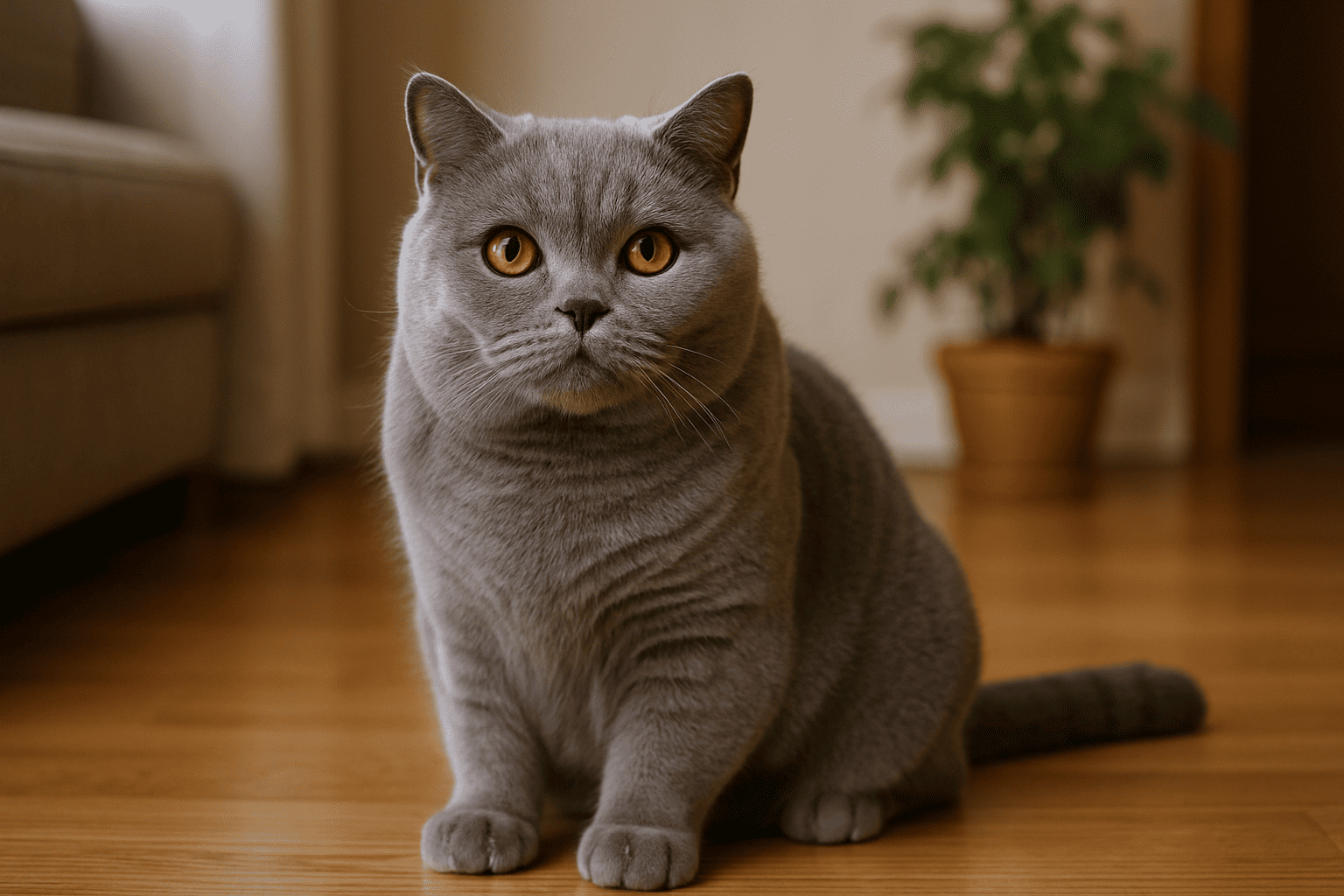
The British Shorthair is one of the most iconic cat breeds in the world, known for its round facial features, plush coat texture and dignified presence. Originally developed from the native short-haired cats of Britain, this breed has a well-defined identity shaped by its history, physical structure and unique temperament. In this guide, you’ll find everything about the British Shorthair’s background, appearance, character traits and daily behavior patterns.
Origin and Development of the British Shorthair
The history of the British Shorthair traces back to the Roman Empire. When Roman soldiers arrived in Britain, they brought sturdy, muscular cats with them. These cats interbred with the local feline population, forming the foundation of what would later become the British Shorthair.
In the 19th century, English breeder Harrison Weir refined the breed and showcased it at the world’s first cat show held in Crystal Palace in 1871. Ever since, the British Shorthair especially the famous “British Blue” variety has remained a British classic with global popularity.
Physical Characteristics of the British Shorthair
British Shorthairs have a presence that instantly conveys “soft, friendly and reliable.” Their body proportions and facial expressions are unmistakably unique.
General Body Structure
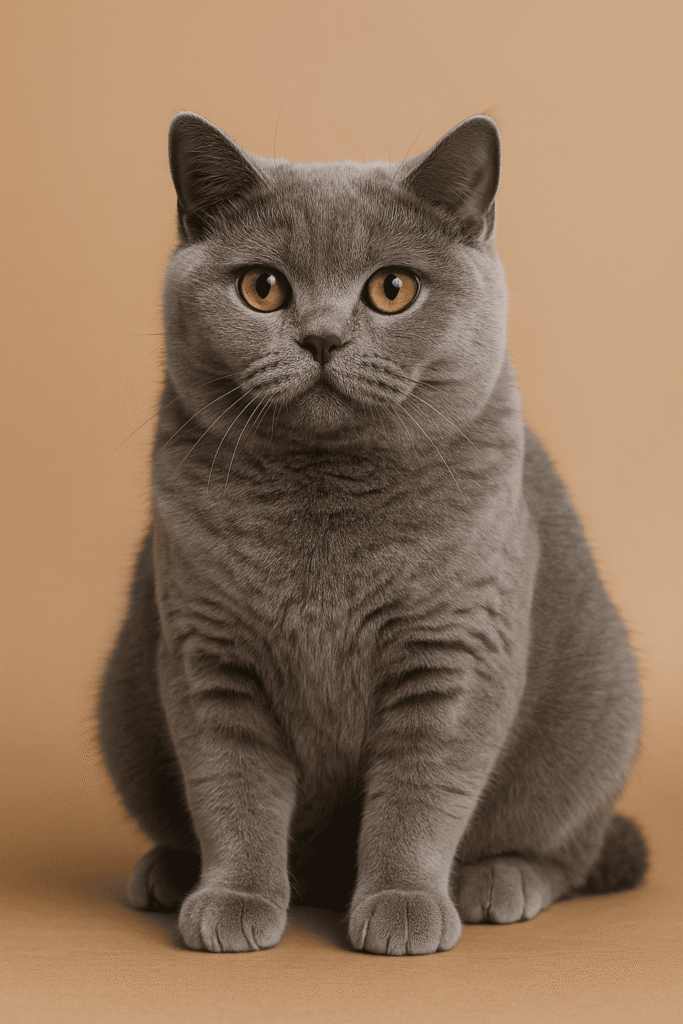
This breed is best known for its strong, muscular and compact build. They are medium to large-sized cats with a noticeably sturdy skeleton. When you pick one up, they feel pleasantly dense.
- Males: typically 6–8 kg, sometimes up to 10 kg
- Females: generally 4–6 kg
This weight difference is part of the breed’s natural dimorphism.
Head Shape and Expression
The British Shorthair has a famously round face, full cheeks and a short, broad nose. Many describe them as looking “teddy bear-like,” particularly male cats whose cheeks grow more pronounced with age.
Their eyes are large, round and expressive. Copper and amber are the most common colors, but blue, gold and green tones also occur. Eye color may take up to two years to fully develop.
Ears, Legs and Tail
Their ears are short, wide at the base and softly rounded at the tips, balancing the round facial profile.
Legs are short to medium in length, strong and well-boned, with round, firm paws.
The tail is medium in length, thick at the base and gently tapers toward the end.
Coat Texture and Colors
One of the British Shorthair’s most beloved features is its short, dense, plush-like coat. It feels velvety to the touch and stands slightly away from the body due to its thickness.
While the classic color is the iconic blue-grey (British Blue), the breed has over a hundred recognized colors and patterns, including:
- Blue
- Lilac
- Cream
- Black
- Golden
- Silver shaded
- Tabbies
- Bicolors
From experience, silver and golden shaded varieties tend to have slightly denser coats, whereas the blue variety often showcases the plush texture most prominently.
Personality and Temperament of the British Shorthair
The British Shorthair behaves very much like an English gentleman calm, composed and pleasantly reserved.
Calm and Gentle Nature
This breed has a naturally tranquil and balanced temperament. They don’t create chaos around the house and often prefer relaxing in a quiet corner while observing their surroundings.
They adapt easily to changes, loud environments or visitors, showing a strong tolerance to stress. Their composed nature makes them ideal companions for city living.
Independent yet Affectionate
British Shorthairs are affectionate without being clingy.
They enjoy being near their owners, but they do not typically enjoy being carried or held for long periods.
My personal observation: Their love language is subtle yet sincere—they express attachment simply by sitting beside you in silence.
Highly Social and Adaptable
British Shorthairs generally get along well with:
- Children
- Other cats
- Dogs (with proper introduction)
They rarely show aggression and prefer to observe before interacting, making them excellent family companions.
Intelligence and Learning Style
They are intelligent cats, but they use this intelligence more for understanding routines rather than performing tricks. They learn quickly, adapt to household rules and appreciate consistent routines.
Communication Style
British Shorthairs are quiet cats.
They communicate with gentle sounds, soft meows or expressive looks rather than loud vocalizations. People living with them often describe it as “silent communication.”
Lifestyle and Daily Behavior Patterns
A British Shorthair’s day is shaped by calm activities, simple pleasures and quiet companionship.
Love for Comfort
Comfort is a core part of their personality.
Soft beds, warm blankets and sunny window ledges are their favorite resting spots. A British Shorthair can spend hours sunbathing happily.
Play Style
They enjoy short, calm play sessions. Their hunting instinct emerges when playing with:
- Feather wands
- Mouse toys
- Boxes and tunnels
They don’t require constant play but appreciate short, engaging interactions.
Affection Style
British Shorthairs follow their owners from room to room, quietly showing companionship.
They often express affection with gentle head rests, leaning into your hand or slow blinking, which is their version of a silent “I trust you.”
In my experience, their devotion is deep yet understated perfect for owners who enjoy peaceful and balanced companionship.
Frequently Asked Questions About the British Shorthair
Do British Shorthairs like being held?
Not usually. They prefer sitting beside their owners rather than being carried.
Are they suitable for apartment living?
Absolutely. Their calm nature and low energy levels make them ideal indoor companions.
Are they good with children?
Yes. They are patient, tolerant and gentle, making them great with kids.
Do they shed a lot?
They shed moderately and experience seasonal shedding periods.
Why is this breed so popular?
Because they combine beauty, calm temperament and strong adaptability, making them one of the most ideal family pets.

