


The Dalmatian is one of the world’s most recognizable dog breeds, known for its sleek white coat covered with distinct black or liver spots. With a rich history, a unique appearance and a lively personality, the Dalmatian has long been admired as both a working dog and a loyal family companion.
Origin and Historical Background
Although the exact origin of the Dalmatian is not fully confirmed, the most widely accepted belief is that the breed comes from the Dalmatia region of Croatia. However, the modern appearance of the Dalmatian was shaped largely in 19th-century England, where the breed became widely popular.
Throughout history, the Dalmatian has been valued for its versatility.
In England, it was famously used as a carriage dog, trotting alongside horse-drawn coaches to provide protection and add a touch of elegance. This role contributed to nicknames such as Carriage Dog and English Coach Dog.
Another culturally iconic association is with fire stations. Originally used to chase away rodents, Dalmatians became beloved mascots of firefighters and continue to hold symbolic importance in many firehouses today.
Historically, their duties also included:
• hunting
• military guard work
• carrying messages and supplies
• performing in circuses
• controlling vermin
These roles highlight the breed’s intelligence, endurance and adaptability.
Physical Structure and Distinct Appearance
Dalmatians have a refined yet athletic build. Their muscular bodies give them speed and stamina, while their elegant lines make them visually striking.
Size and Weight
Typical adult measurements include:
• Height: 48 to 60 cm
• Weight: 18 to 32 kg
Males are generally slightly larger and heavier than females.
Coat and Iconic Spots
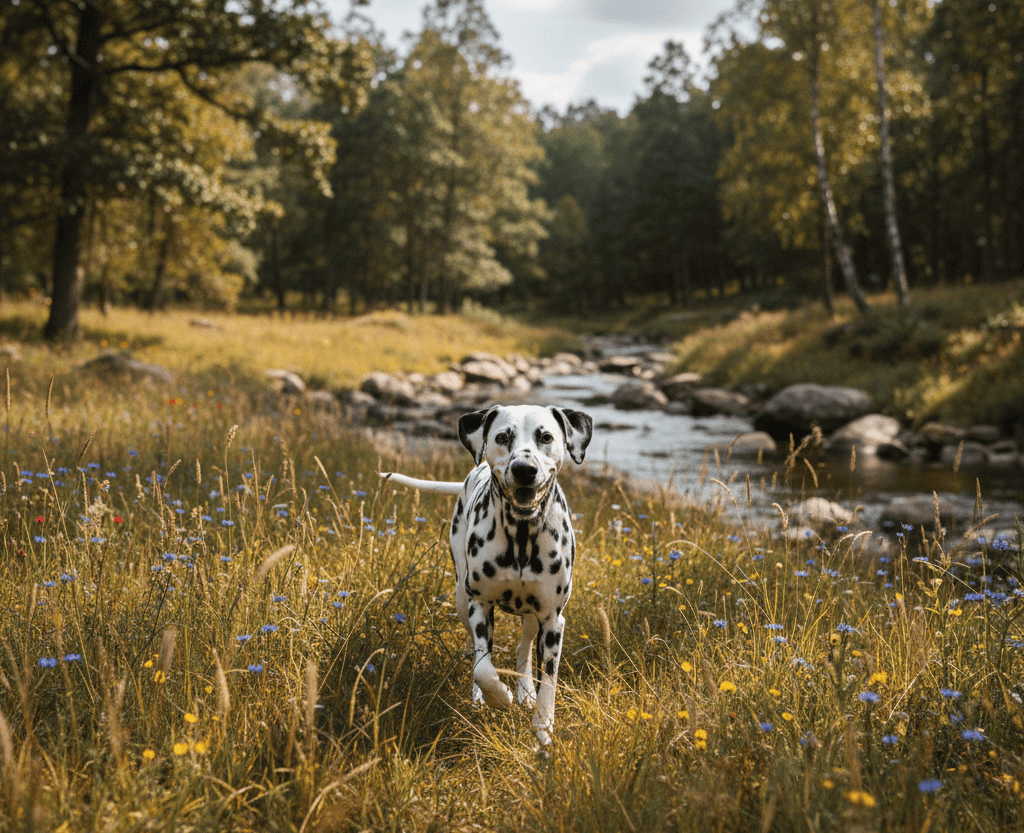
One of the most notable characteristics of the breed is its spotted coat. Interestingly, Dalmatian puppies are born completely white, and their spots begin to appear within days or weeks after birth.
Spot details:
• color: black or liver
• diameter: usually 2–3 cm
• always matches the color of the nose
• round, clear, and separate from each other
Eyes and Expression
Their eyes may be dark brown, amber or, more rarely, blue. Some individuals even have heterochromia (two different colored eyes). Their alert expression and sharp facial features reflect the breed’s intelligence and attentiveness.
Temperament and Behavioral Traits
Known for their lively and affectionate personality, Dalmatians bring joy and energy to their households. Yet, they require proper guidance to thrive.
Emotional and Social Traits
The Dalmatian forms strong bonds with its family. It thrives on companionship and dislikes being left alone for long periods. Extended isolation can lead to sadness, withdrawal or destructive behaviors.
Because of this, potential owners should be ready to include the Dalmatian in their daily routine and provide plenty of attention.
Relationship with Children and Other Animals
Dalmatians typically get along very well with children and enjoy active play. Their high energy level, however, means they may accidentally knock over small children.
They generally coexist peacefully with other pets, and their fondness for horses is a direct reflection of their historical role as carriage dogs.
Relations with other dogs can vary. Early socialization is essential to reduce the risk of possible aggression and to encourage balanced behavior.
Intelligence and Leadership Needs
Dalmatians are highly intelligent but can also be stubborn. They tend to take control if strong and consistent leadership is lacking. Clear boundaries, routine and positive reinforcement help them learn effectively.
In my experience, Dalmatians combine high energy, sharp intelligence and a touch of independence, which creates a strong and expressive personality. Managed well, they become incredibly loyal and entertaining companions.
Lifestyle Compatibility
Because of their naturally high activity levels, Dalmatians need space to move and regular daily exercise. They can adapt to apartment living as long as their exercise needs are fully met.
The breed’s typical life expectancy is 10 to 13 years, though many can live up to 15 or more with proper care.
Frequently Asked Questions About Dalmatians
Do Dalmatians shed a lot?
Yes. Despite their short coat, they shed consistently throughout the year. Regular brushing helps control loose hair.
Can a Dalmatian live in an apartment?
Yes, but only if it receives adequate daily exercise. The breed has high energy and needs regular physical activity.
How do they behave around strangers?
They approach strangers with caution. Their natural guarding instincts may make them reserved at first.
Do their spots change over time?
Spots develop during puppyhood. While minor changes may occur as they grow, the overall pattern remains consistent.
Are Dalmatians good with children?
Generally, yes. They are playful and patient. Supervision is recommended with small children due to the breed’s energetic nature.

