
The African Grey Parrot, also known as the Jako parrot, is one of the most unique bird species in the world, renowned for its intelligence, speaking ability, and strong emotional connection with humans. In this content, I focus solely on breed characteristics its origin, temperament, intelligence, appearance, natural tendencies, and overall behavioral profile. All information has been expanded, made more original, and refined while keeping the structure intact.
Origin and Natural Habitat
Scientifically known as Psittacus erithacus, the African Grey Parrot inhabits a wide natural range stretching from West to Central Africa. It can be found in countries such as Guinea, Ivory Coast, Congo, and Uganda. This region’s high humidity and year-round warm climate perfectly match the biological needs of the species. The parrot primarily prefers the tall trees of tropical rainforests, where it can safely nest and access diverse food sources.
However, African Greys are not confined to rainforests alone. They adapt well to savanna edges, mangrove swamps, and open woodland areas. In the wild, they live in flocks, and this flock-based lifestyle deeply shapes their social intelligence and strong bonding tendencies. Even when domesticated, it is easy to see that the species retains much of its wild social instinct.
Physical Structure and Distinguishing Features
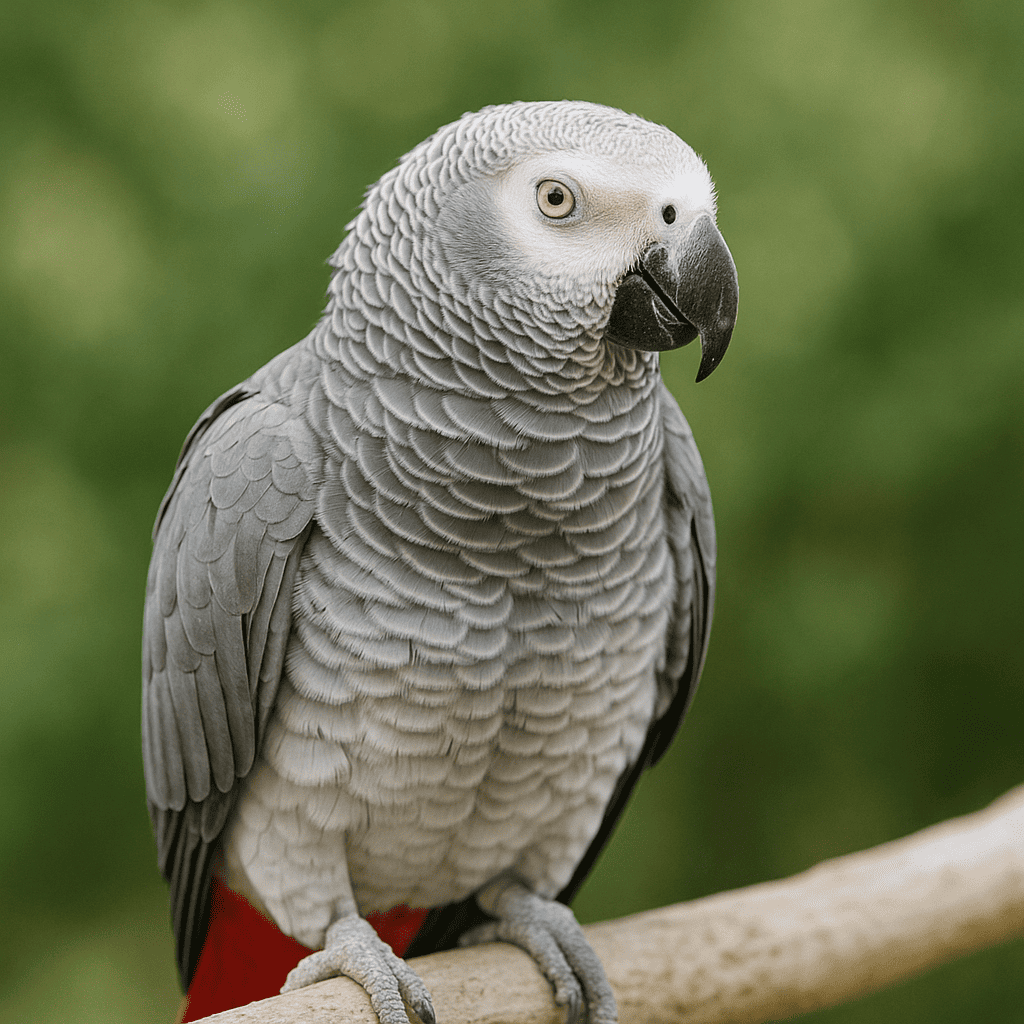
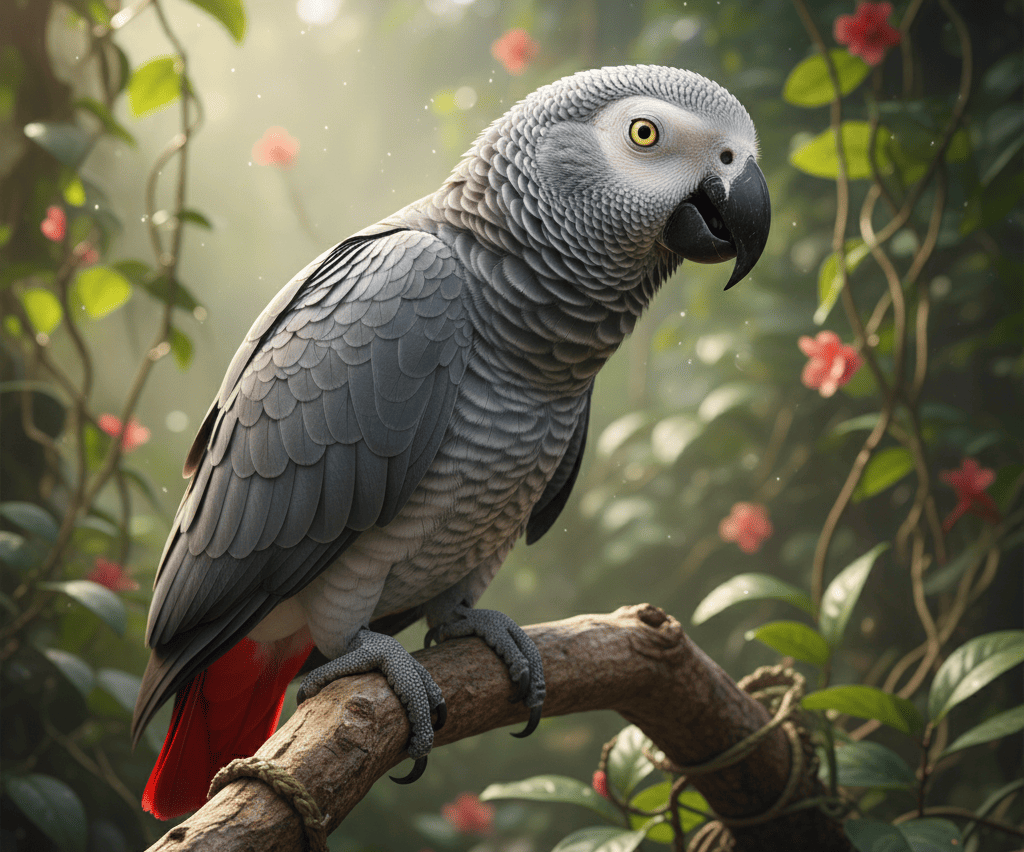
The African Grey’s most recognizable trait is its elegant gradient of grey feathers. Although the grey color may appear simple at first glance, up close, each feather carries a subtle shift in tone, creating a refined and noble overall appearance. This neutral palette is dramatically contrasted by their bright red tail feathers, which serve as the hallmark of the species. Their strong, black beak provides both impressive crushing power and delicate grip precision, while their white eye mask highlights their facial expressions.
Young Greys have darker plumage, which gradually lightens as they mature. The same transition applies to eye color: chicks have dark, almost black-grey eyes, which turn into a sharp yellow-orange tone in adulthood, giving them a distinctly alert expression.
Intelligence and Speaking Capacity
What truly sets the African Grey apart is its extraordinary intelligence. Scientific studies show that this species possesses cognitive abilities comparable to a four- to six-year-old child. They not only memorize words but are also capable of using them in context, which distinguishes them from other talking birds. For example, they don’t simply repeat a sound—they apply it appropriately in relevant situations.
Some individuals have been recorded using over 1,000 words. Additionally, they can expertly mimic environmental noises such as phone rings, doorbells, laughter, or kitchen sounds. When communicating with an African Grey, you genuinely feel as though you are interacting with a thinking, analyzing being. For this reason, many experts describe African Greys not merely as mimics but as interpretive communicators.
Behavioral Patterns and Temperament
The African Grey is a species with notable emotional depth. In the wild, they live in cohesive flocks, and this social structure strongly influences their behavior in captivity. They tend to form deep bonds with their owners. While they may remain cautious or distant with strangers, they are affectionate toward the people they trust. This bond can manifest in behaviors such as jealousy, possessiveness, or a strong desire for attention.
Behind their usually calm appearance lies a very active mind. They are constant observers, analyzing their environment and paying attention to even the smallest details. For this reason, lack of stimulation, loneliness, or monotony can cause significant stress. Feather plucking, which is sadly common in neglected individuals, is one of the clearest reflections of their emotional sensitivity.
Based on experience, the best way to understand African Greys is to view them not as “pet birds” but as highly intelligent individuals. They express emotions clearly and are capable of engaging in interactive communication with their human companions.
Subspecies: Congo and Timneh
African Grey Parrots are divided into two main subspecies, and they differ noticeably in appearance, personality, and speaking development. The Congo African Grey is the most widely recognized subspecies, known for its bright grey feathers and vibrant red tail. It is generally larger in size and begins speaking a bit later. It is also known for its distinct ability to imitate tone and pitch.
The Timneh African Grey, on the other hand, is smaller and has a darker, more charcoal-toned plumage with a maroon or chestnut-colored tail. Timnehs are often calmer and may learn to speak earlier, sometimes forming short words as early as six months. Their milder temperament makes them a suitable option for first-time Grey owners.
Social Structure and General Personality
African Greys are highly social animals. They don’t just exist within their environment they actively seek interaction. When you’re around them, they may call for your attention, follow you with their eyes, or respond to what you say. These behaviors are reflections of their natural flock instincts.
One of their strongest traits is their observational ability. They easily notice changes in daily routines, shifts in tone, or even slight variations in body language. All these characteristics make them exceptionally special, but they also require a high level of care and responsibility.
Frequently Asked Questions About African Grey Parrots (FAQ)
Do African Greys actually understand what they say?
Yes. They don’t simply mimic; they can use words in appropriate contexts, making them one of the few parrot species capable of contextual communication.
Which talks better: Congo or Timneh?
Timnehs tend to start talking earlier, while Congos typically produce clearer and more tonally accurate vocalizations. Speaking ability varies between individuals.
Are African Greys good with children?
They can adapt well in calm, structured environments. However, sudden movements, loud noises, or chaotic conditions can stress them easily.
Why do they need so much attention?
Because they are naturally flock-oriented birds, social interaction is a fundamental need—not a luxury.
Are African Greys suitable for everyone?
No. Their high intelligence and emotional needs can be challenging for inexperienced owners or for people with very busy lifestyles.