

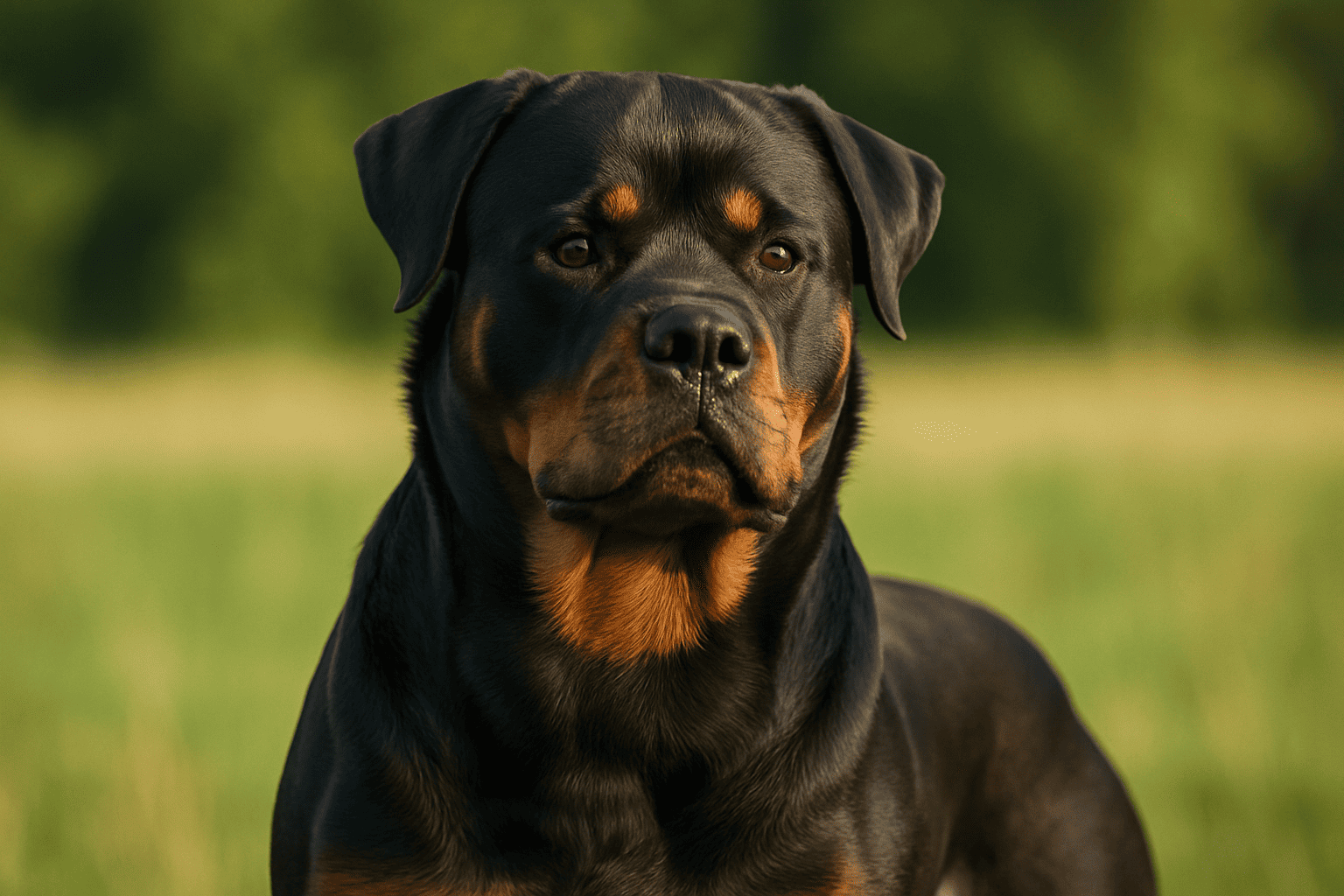
The Rottweiler is one of the world’s most recognizable working dog breeds, known for its powerful physique, deep loyalty, and ancient heritage. Throughout history, this breed has taken on roles ranging from herding to protection, shaping a unique working identity that continues today. Originating from ancient Roman herding dogs and evolving into a versatile modern companion, the Rottweiler maintains its position as a confident, intelligent, and dependable breed.
Origins and Historical Development of the Rottweiler
The history of the Rottweiler goes back to the Roman Empire, where large Molossus-type dogs accompanied Roman legions across Europe. These dogs protected cattle, guarded soldiers, and managed livestock during long military journeys. When the Romans reached the region now known as Rottweil, Germany, their dogs interbred with local working breeds, forming the foundation of today’s Rottweiler.
Over time, the breed became known as the “Rottweiler Metzgerhund” (Rottweil Butcher’s Dog). They were used to drive cattle and pull meat-laden carts to market. A well-known historical detail is that butchers sometimes tied their money pouches around their dogs’ necks to protect them from thieves.
Although the breed nearly declined during the rise of rail transport in the 19th century, the early 20th century marked its revival. Rottweilers were rediscovered as excellent dogs for police work, military service, search and rescue, and protection duties. Today, breed standards are regulated internationally by organizations such as ADRK and AKC, ensuring the Rottweiler remains a strong and capable working dog.
Physical Characteristics and Breed Standard
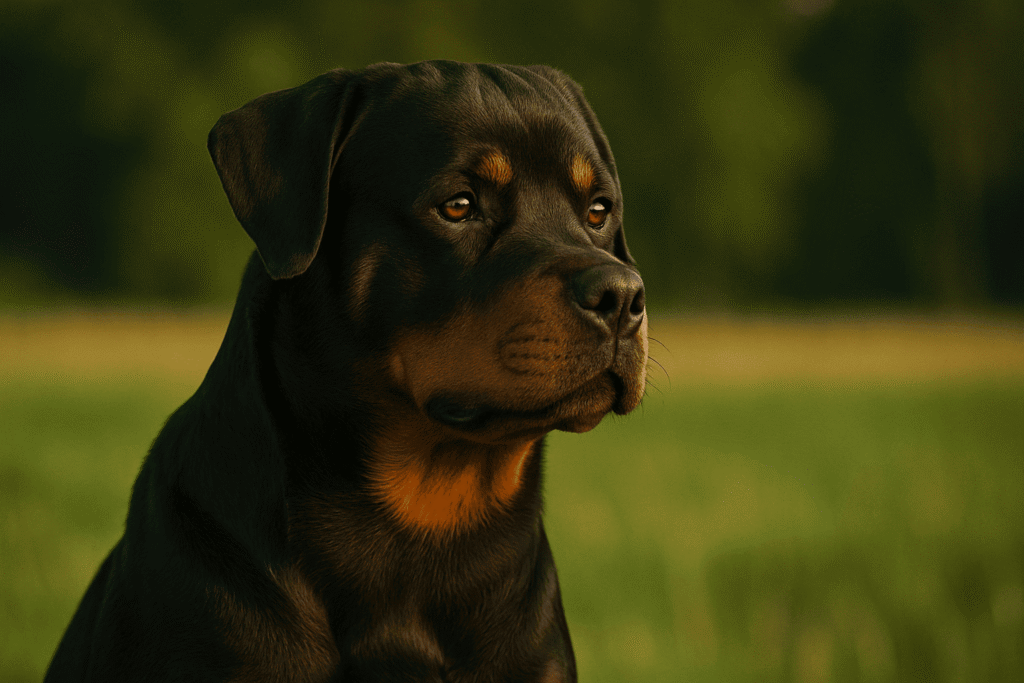
The Rottweiler has a powerful, compact, and muscular body, giving it a commanding appearance. Despite its size, it moves with agility and purpose, reflecting its working heritage.
General Structure
- Male height typically ranges from 61 to 69 cm, females from 56 to 63 cm at the withers.
- They possess dense bone structure, a strong stance, and well-defined musculature.
- The head is broad, often described as having a “blocky” shape, with a well-developed muzzle.
Coat and Color
The coat is short, dense, and double-layered, providing durability against different climates.
Rottweilers are always black with clearly defined rust or mahogany markings.
Notable Breed Standard Features
- Eyes are dark brown; blue eyes do not meet the standard.
- Ears are triangular and lie close to the head.
- Many countries now require the tail to remain natural.
- Long-coated Rottweilers exist but are rare and not preferred in conformation shows.
These characteristics reflect a breed designed for power, endurance, and attentive control.
Temperament and Personality
Understanding a Rottweiler means recognizing it as a thinking dog. Rather than reacting impulsively, this breed analyzes situations and chooses its responses with intent.
Intelligence and Learning Ability
Rottweilers excel in problem-solving and structured tasks.
- They learn commands quickly.
- They respond well to direction.
- They perform exceptionally in complex or high-focus jobs.
This intelligence has made them valuable in police work, tracking, and other working roles.
Loyalty and Protective Nature
A defining trait of the breed is deep loyalty blended with a natural guarding instinct.
Rottweilers are gentle and affectionate with their families, often showing a calm, devoted presence inside the home.
Social Behavior
Toward strangers, they are generally reserved rather than fearful or aggressive.
Based on general observation, a Rottweiler tends to adopt a “wait and see” attitude, which directly stems from its protective heritage.
Behavioral Traits
- They do not bark excessively.
- They can play physically and may appear rough to those unfamiliar with the breed.
- Young Rottweilers often display clumsy behavior, which owners commonly find amusing.
Working Ability of the Rottweiler
The Rottweiler is one of the most respected working dogs in history. Its value comes not only from physical strength but also from mental focus and discipline.
Herding Instinct
Because of its origins as a cattle-driving dog, the Rottweiler still carries strong herding tendencies.
They excel in identifying dominant animals and controlling movement confidently.
Modern Work Roles
Today, Rottweilers are used in several fields:
- Search and rescue
- Police K9 units
- Tracking and detection work
- Protection tasks
- Carting sports and other working competitions
In my view, the breed’s greatest strength is the balance between controlled working drive and disciplined focus.
Endurance
Although powerful, their compact build and dark coat can make them tire more quickly in hot weather or prolonged tasks. This is taken into consideration during demanding operational work.
Frequently Asked Questions (Rottweiler Breed FAQ)
Why is the Rottweiler so effective in protection work?
Because it naturally analyzes situations, combines intelligence with calm confidence, and has strong protective instincts.
Is the Rottweiler a social dog?
With its family, yes—highly social and affectionate. With strangers, it maintains polite reservation.
Do Rottweilers bark a lot?
No. They typically bark only when necessary.
Is the Rottweiler an aggressive breed?
Not inherently. Aggression usually results from poor training, inadequate socialization, or environmental issues.
Why is the Rottweiler called a “thinking dog”?
Because it evaluates situations before reacting, showing deliberate control rather than impulsive behavior.