

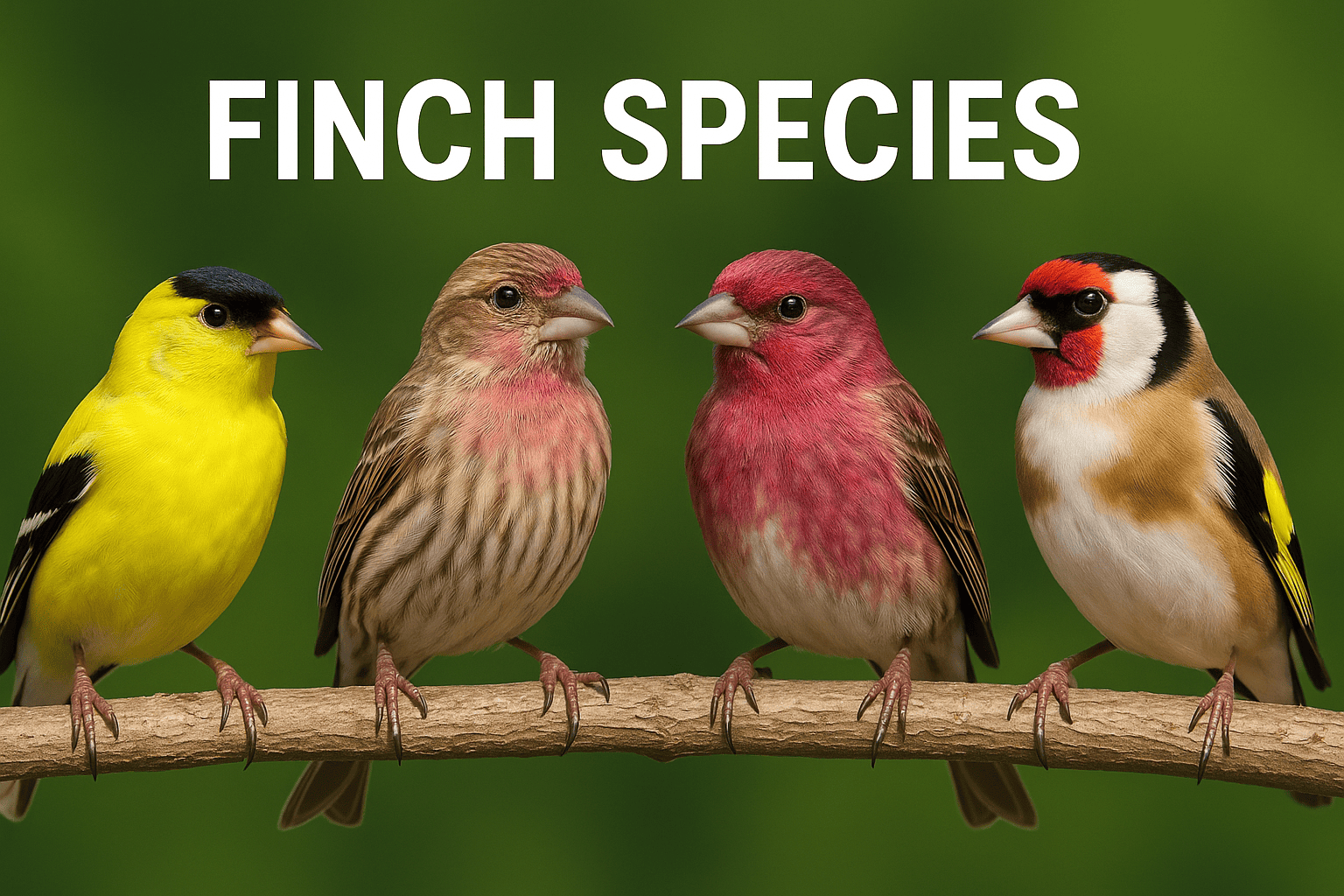
Finch species represent one of the most diverse and visually striking groups of birds, known for their conical bills, colorful plumage, and distinctive vocalizations. As members of the Fringillidae family, finches are admired by birdwatchers and studied by ornithologists for their fascinating variety and adaptability. Each species differs in appearance, behavior, and habitat preferences, making finches a remarkable example of global biodiversity.
Origins and Evolutionary Richness of Finch Species
Despite inhabiting different regions across the globe, finches share core morphological traits such as a conical bill, compact body, and agile flight. These features reflect their natural adaptation to seed-based diets.
The International Ornithological Committee currently recognizes 238 finch species, highlighting the extensive evolutionary branching within this family.
My observation: Finches display what could be called “micro-diversity.” Even species living in the same region can differ drastically in bill shape, color intensity, or vocal style. This showcases their strong adaptive potential.
Notable Finch Species in North America and Europe
Below are some of the most documented and widely recognized finch species, frequently mentioned in scientific sources and beloved by bird enthusiasts:
American Goldfinch
One of North America’s signature finches.
- Breeding males feature bright yellow plumage and black wings.
- Prefers open fields and suburban landscapes.
- Known for their social behavior and rhythmic, buoyant flight patterns.
House Finch
Famous for adapting to human environments.
- Males have rose-red plumage, with shades varying based on diet.
- Wide, slightly curved bill makes it an efficient seed-cracker.
Purple Finch
Often described as looking “dipped in raspberry juice.”
- Thrives in cold, moist deciduous forests.
- Easily recognized by pinkish-red tones across the head and chest.
European Goldfinch
One of Europe’s most recognizable finches.
- Features a red facial mask, black-white head, and yellow wing streak.
- Its long, slender bill is adapted to accessing seeds in tight spaces.
Crossbill
One of the most unique finches due to its unusual bill structure.
- Bill tips cross over each other.
- Perfectly adapted for extracting seeds from conifer cones.
- A very distinctive bird to observe in the wild.
Evening Grosbeak & Pine Grosbeak
The larger members of the finch family.
- Recognized by their robust bodies, thick bills, and short tails.
- Males display stunning yellow or rose-colored plumage.
Size and Lifespan Among Finch Species
While finches are generally small birds, the size range across species is surprisingly wide:
- The Lesser Goldfinch weighs only 8–11 grams.
- The Evening Grosbeak reaches 50–60 grams, making it a “giant” among finches.
My insight: These size differences reflect how flexible and ecologically diverse the family is, with each species carving out its own niche.
Behavioral Categories Within Finch Species
Finches vary not only in appearance but also in temperament. In aviculture, species are often grouped by behavior:
- Passive species: Lady Gouldian, Star Finch
- Pushy species: European Goldfinch, Green Singing Finch
- Aggressive species: Cut-throat Finch, Diamond Firetail
These categories reflect their natural social dynamics, with aggressive species often originating from regions where competition is intense.
Frequently Asked Questions
Why are finch species so diverse?
Geographic isolation, varied climates, and dietary differences have driven rapid evolutionary divergence, leading to a large number of species.
What feature distinguishes finches from other songbirds?
Their conical, seed-cracking bill is the most defining characteristic.
Which finch species is considered the most colorful?
The Gouldian Finch is often considered the most visually stunning, though European Goldfinch and Purple Finch are also highly admired.
Why does the Crossbill have such a unique bill shape?
Its crossed bill evolved to pry open tightly sealed conifer cones, a rare and highly specialized adaptation.
Can different finch species live together?
Some species can form mixed flocks in the wild, but temperament varies widely, so compatibility is not always guaranteed.

