

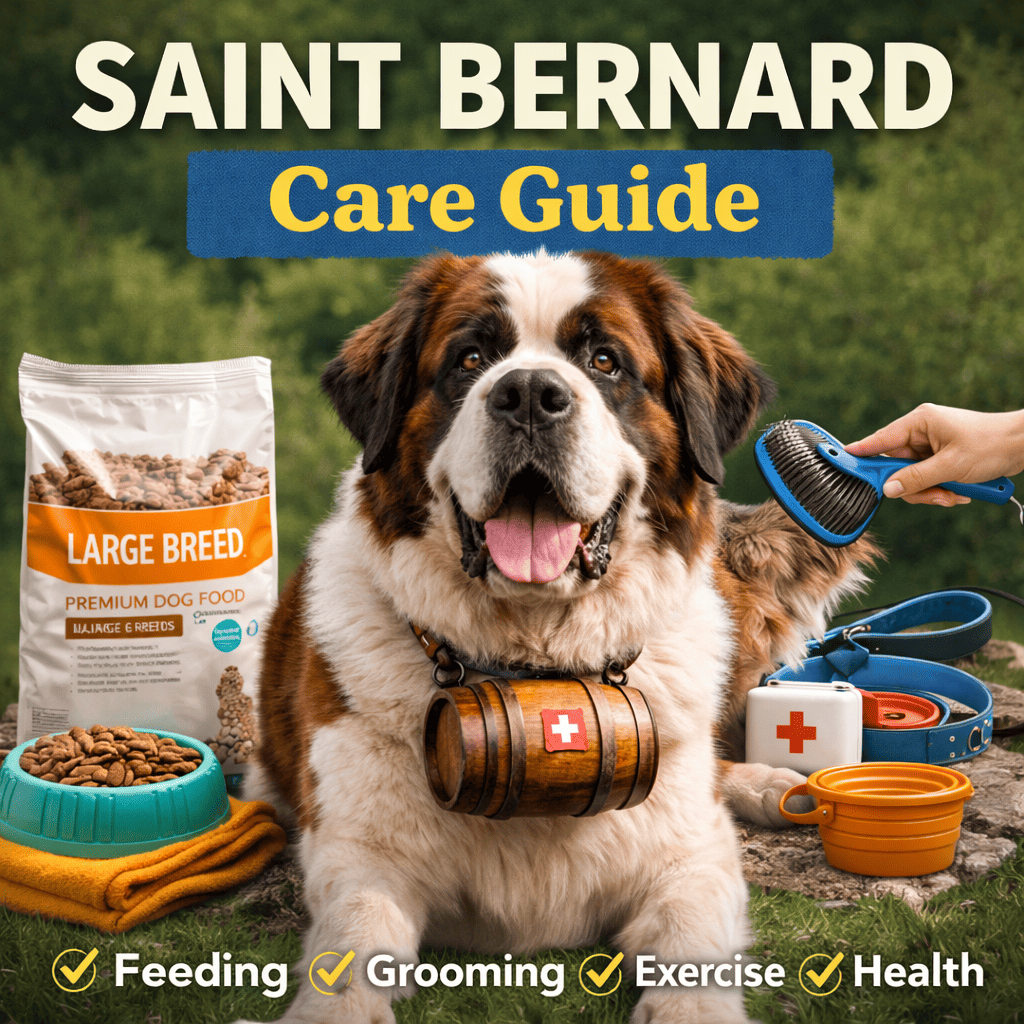
Caring for a Saint Bernard is a rewarding experience, but it comes with responsibilities that go beyond standard dog ownership. Often called Gentle Giants, Saint Bernards are calm, affectionate, and deeply loyal, yet their massive size and breed specific sensitivities require informed and consistent care. When their needs are met correctly, they become one of the most devoted companion dogs a family can have.
Feeding Routine and Digestive Safety
Despite their enormous build, Saint Bernards do not require excessive amounts of food relative to their size. Their metabolism is slower than that of high energy working breeds, which makes proper feeding structure far more important than quantity.
Dividing daily food into two or three meals is essential to reduce the risk of gastric dilatation volvulus (bloat), a life threatening condition common in deep chested giant breeds. Feeding once a day places unnecessary strain on the digestive system.
Equally important is meal timing. Strenuous activity should be avoided both before eating and for several hours afterward. Even excited play immediately after meals can increase internal pressure on the stomach.
Using slow feeder bowls helps prevent rapid swallowing of food, while bowls should remain at floor level rather than elevated. High quality large breed formulas enriched with glucosamine and chondroitin support joint integrity and long term mobility, which is crucial for such a heavy dog.
Coat Care, Drooling, and Hygiene
Saint Bernards can have either short or long coats, but both varieties shed heavily throughout the year, with seasonal peaks during spring and fall.
Daily brushing for 10 to 15 minutes helps control shedding, improves circulation, and prevents matting, especially around the chest and hindquarters. Long coated individuals benefit from more detailed grooming sessions several times a week.
Drooling is part of life with a Saint Bernard. Their loose facial structure naturally produces saliva, especially after eating or drinking. Keeping clean towels accessible around the house quickly becomes a practical habit rather than a nuisance.
Facial folds and eye areas should be gently wiped with a damp cloth to prevent irritation and bacterial buildup. Due to their low hanging ears, weekly ear inspections are necessary to catch early signs of infection before they become painful or chronic.
Exercise Needs and Daily Activity
Saint Bernards are not high energy dogs, but they still require consistent moderate exercise to maintain muscle tone and prevent excessive weight gain.
Daily walks totaling 30 to 60 minutes are usually sufficient when combined with light mental stimulation such as scent games or basic training exercises. Overexertion should be avoided, especially during growth stages and in senior years.
This breed is extremely heat sensitive. Their thick coat and large body mass make them vulnerable to overheating. During warm weather, walks should be scheduled in early morning or evening hours, and access to cool indoor spaces is non negotiable.
Saint Bernards are highly people oriented. Long periods of isolation can lead to separation related behaviors or emotional withdrawal. They thrive best when integrated into daily family life rather than left alone outdoors.
Training and Social Development
Training should begin early while the dog is still physically manageable. An untrained adult Saint Bernard can be difficult to control simply due to size rather than temperament.
Positive reinforcement methods using praise, calm repetition, and rewards are the most effective. Harsh corrections often backfire, as this breed is emotionally sensitive and may become stubborn or withdrawn.
Basic manners such as not jumping, loose leash walking, and calm greetings should be taught during puppyhood. Early socialization with different people, environments, and other animals helps prevent shyness or overprotective tendencies later in life.
Common Health Considerations in Daily Care
The average lifespan of a Saint Bernard is 8 to 10 years, which is typical for giant breeds. Daily care routines play a significant role in preserving their comfort and mobility.
Joint related conditions such as hip and elbow dysplasia are common, making controlled exercise and weight management critical. Eye conditions including entropion and ectropion should be monitored regularly, as early treatment can prevent chronic discomfort.
There is also a higher incidence of osteosarcoma in this breed, reinforcing the importance of regular veterinary checkups and immediate evaluation of unexplained limping or swelling.

