

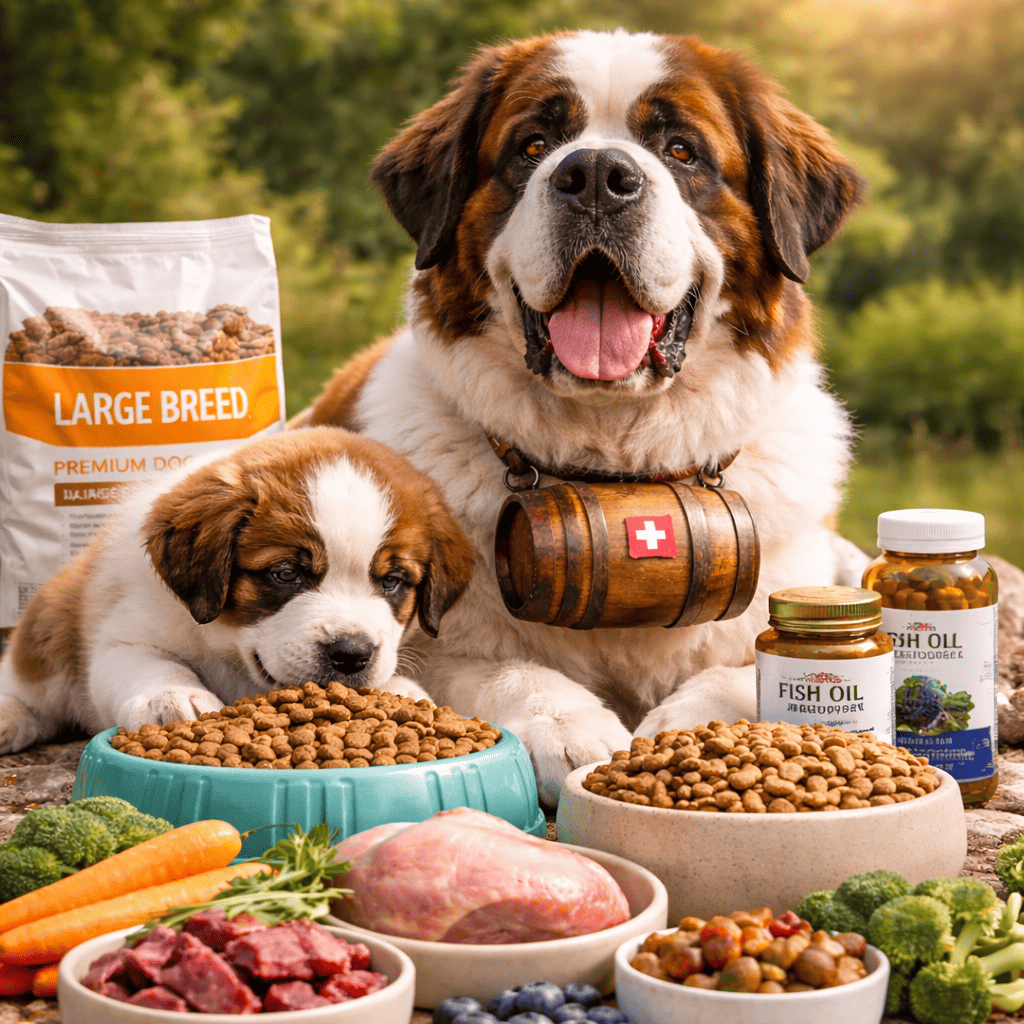
Proper nutrition is one of the most critical factors in maintaining the health mobility and longevity of a Saint Bernard. Due to their giant size slow metabolism and unique digestive sensitivities Saint Bernards require a carefully structured feeding plan rather than simply large portions of standard dog food. Feeding mistakes made early in life often lead to joint disease obesity or life threatening digestive issues later on.
Understanding Saint Bernard Nutritional Needs
Saint Bernards grow rapidly but mature slowly. This imbalance makes them especially vulnerable to skeletal stress if nutrition is not precisely balanced.
Unlike high energy working dogs they do not burn excessive calories. Overfeeding is one of the most common mistakes and directly contributes to joint damage heart strain and reduced lifespan. The goal of Saint Bernard nutrition is controlled growth steady weight and joint protection, not rapid size gain.
Puppy Nutrition and Growth Control
Saint Bernard puppies should never be fed calorie dense foods designed for small or athletic breeds.
A large breed puppy formula with controlled calcium and phosphorus levels is essential to support proper bone development. Excess minerals can cause abnormal bone growth which increases the risk of hip and elbow dysplasia.
Meals should be divided into three portions per day during puppyhood. Free feeding must be avoided as it promotes uneven growth and digestive stress. Protein levels should be moderate rather than excessive focusing on quality animal sources instead of raw quantity.
Adult Saint Bernard Feeding Strategy
Adult Saint Bernards typically do best on two meals per day. Feeding once daily significantly increases the risk of gastric dilatation volvulus.
High quality large breed adult formulas should contain
Moderate protein to maintain muscle without overloading the system
Healthy fats for skin and coat support
Added glucosamine and chondroitin for joint preservation
Portion control is critical. Even small daily overfeeding can lead to dangerous weight gain due to their slower metabolism.
Joint Support Through Nutrition
Joint health begins in the food bowl for this breed.
Key nutrients that should be present include
Glucosamine and chondroitin for cartilage support
Omega 3 fatty acids to reduce inflammation
Vitamin E and antioxidants to support tissue repair
In my experience owners who focus early on joint supporting nutrition see noticeably better mobility and comfort as their dogs age.
Digestive Safety and Bloat Prevention
Saint Bernards are among the breeds most at risk for bloat.
To reduce this risk
Meals should always be divided
Exercise must be avoided before and after feeding
Food should be eaten slowly using anti gulp bowls
Water intake should be calm not excessive immediately after meals
Elevated bowls are no longer recommended by many veterinarians as they may increase bloat risk rather than reduce it.
Weight Management and Body Condition
A healthy Saint Bernard should feel solid but never heavy.
You should be able to feel the ribs under light pressure without seeing them prominently. Excess weight dramatically increases strain on joints heart and respiratory function. Weight checks every month help catch problems early before they become difficult to reverse.
Treats should be limited and preferably functional such as joint chews or low calorie training rewards.
Hydration and Water Intake
Clean fresh water must always be available. Due to their size Saint Bernards drink large amounts but dehydration can still occur especially in warm weather.
Water bowls should be cleaned daily to prevent bacterial growth which can upset their sensitive digestive system.
Frequently Asked Questions About Saint Bernard Nutrition
How much should a Saint Bernard eat per day
This depends on age weight and activity level but most adults require less food than expected for their size.
Can Saint Bernards eat raw diets
Raw feeding can work only if professionally balanced. Improper mineral ratios can cause severe joint damage.
Are supplements necessary
Only when recommended by a veterinarian. Over supplementation can be just as harmful as deficiencies.

