

The Cockatiel, scientifically known as Nymphicus hollandicus, is one of the most popular companion birds in the world due to its gentle temperament, intelligence, and adaptability. Proper cockatiel care goes beyond basic feeding and housing. It requires an understanding of their social needs, daily routines, mental stimulation, and environment. When these needs are met, cockatiels form strong bonds with their owners and thrive for many years.
Understanding Cockatiel Care Needs
Cockatiels are highly social parrots that evolved in flocks. In captivity, this translates into a strong need for interaction, consistency, and emotional security. Neglecting these aspects often leads to stress related behaviors such as excessive screaming, feather plucking, or withdrawal.
Good care focuses on creating a balanced lifestyle that supports both physical comfort and psychological well being.
Cage Size and Living Space
A cockatiel’s cage is its primary territory, so space matters more than decoration.
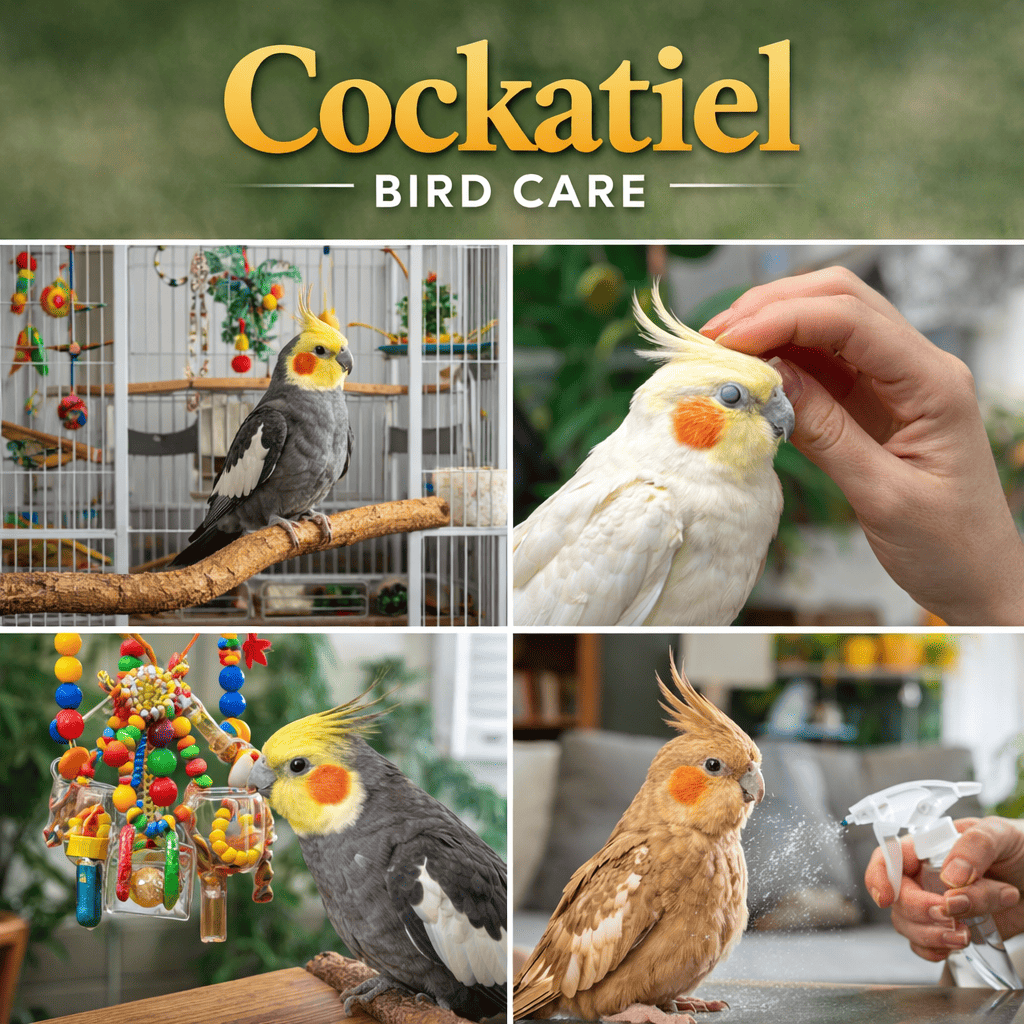
An ideal cage allows the bird to fully spread its wings and move between perches without restriction. Horizontal bar spacing is especially important because cockatiels enjoy climbing. A cramped cage limits movement and often leads to frustration.
Place the cage in a well lit area with daily household activity, but away from drafts, kitchens, and direct air conditioning. Cockatiels feel safest when one side of the cage is against a wall, giving them a sense of protection.
Perches and Cage Setup
Natural wood perches of varying diameters help maintain foot health and balance. Uniform plastic perches should be avoided as the sole option. Position perches so droppings do not fall into food or water dishes.
Inside the cage, the layout should encourage movement rather than stillness. A thoughtfully arranged cage becomes a space for exploration and comfort, not confinement.
Social Interaction and Bonding
Cockatiels are emotionally intelligent birds. Daily interaction is not optional, it is essential.
They respond best to gentle handling, calm speech, and predictable routines. Many cockatiels enjoy sitting on shoulders, learning simple whistles, or quietly observing household activity. Lack of attention often results in clingy or anxious behavior.
In my experience, even short but consistent daily interaction builds trust faster than long but irregular sessions.
Mental Stimulation and Enrichment
Mental enrichment is a core part of cockatiel care.
Rotate toys regularly to prevent boredom. Puzzle toys, shreddable materials, and safe chew items help satisfy natural behaviors. A bored cockatiel is far more likely to develop behavioral problems than one with an enriched environment.
Allowing supervised out of cage time gives cockatiels the chance to fly, explore, and mentally reset.
Daily Routine and Sleep
Cockatiels thrive on routine. They do best with 10 to 12 hours of uninterrupted sleep each night. Covering the cage or placing it in a quiet, dark room helps regulate their internal clock.
Irregular sleep patterns often lead to hormonal behavior, irritability, and reduced immune resilience.
Grooming and Hygiene
Cockatiels are naturally clean birds, but supportive care makes a difference.
Most cockatiels enjoy light misting or shallow bathing, which helps maintain feather quality and skin health. Nails should be checked regularly, and wing trimming should only be done if necessary and preferably by an experienced professional.
The crest feathers deserve attention as well. A healthy crest is smooth, expressive, and free from breakage.
Environmental Safety
Cockatiels are sensitive to airborne toxins.
Avoid exposure to nonstick cookware fumes, cigarette smoke, scented candles, and aerosol sprays. These substances can be dangerous even in small amounts. Clean the cage regularly to prevent bacterial buildup and maintain air quality.
A safe environment is one of the most overlooked but critical aspects of cockatiel care.
Long Term Commitment
With proper care, cockatiels commonly live 15 to 25 years. This makes them a long term companion rather than a short term pet.
Caring for a cockatiel means committing to its emotional and physical wellbeing across different life stages. Owners who understand this often describe the relationship as deeply rewarding.
Frequently Asked Questions About Cockatiel Care
How much daily attention does a cockatiel need
A cockatiel should receive direct interaction every day. Even one to two hours of meaningful engagement can prevent loneliness and stress.
Can cockatiels be left alone during the day
Yes, if their environment is enriched and they receive attention before and after. Long periods of isolation without stimulation should be avoided.
Do cockatiels need out of cage time
Yes. Daily supervised out of cage time supports both physical exercise and mental health.
Is a single cockatiel okay without another bird
Yes, as long as the owner provides consistent social interaction. A single cockatiel often bonds strongly with its human caretaker.
