

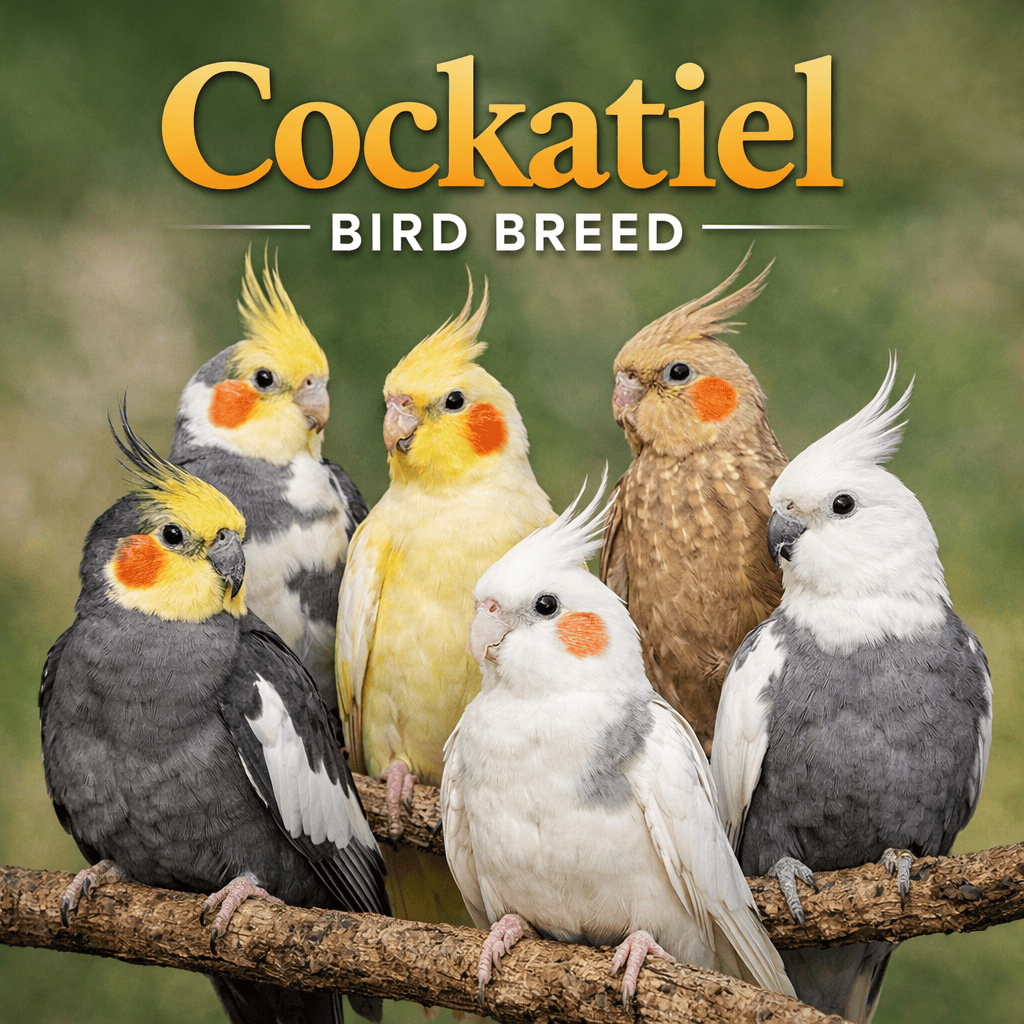
The Cockatiel, scientifically known as Nymphicus hollandicus, is a single bird species that has developed an impressive range of color mutations through decades of selective breeding. Although the term “breed” is commonly used in casual language, cockatiels are more accurately classified by color mutations and visual variations, not by separate breeds. Understanding these variations helps bird enthusiasts appreciate both the genetics and the aesthetic diversity of this iconic companion bird.
What Defines a Cockatiel “Breed”
Unlike dogs or cats, cockatiels do not have true breeds. Every cockatiel belongs to the same species, yet selective breeding has altered melanin and psittacin pigments, resulting in distinct visual traits. These mutations affect feather color, facial markings, and pattern distribution, while the core physical structure remains unchanged.
From a breeder’s perspective, each mutation represents a stable genetic expression rather than a separate lineage. This is why reputable avian sources consistently use the term color mutation instead of breed.
Primary Cockatiel Color Mutations
Wild Type (Grey)
The wild type grey cockatiel represents the natural appearance found in Australia. It features a dark grey body, white wing bars, and bright orange cheek patches. Mature males develop a vivid yellow face, which is one of the clearest visual indicators of sexual maturity in this mutation. This variation is often considered the genetic foundation for most other mutations.
Lutino
The lutino cockatiel is instantly recognizable due to its bright yellow to creamy white body combined with bold orange cheek patches. The absence of dark melanin creates a lighter overall appearance, making this one of the most popular mutations in the pet trade. Despite the soft coloration, lutinos retain the same expressive crest and posture as wild type birds.
Pied
Pied cockatiels display irregular patches of yellow and white scattered across a grey base. Each individual has a unique pattern, which means no two pied cockatiels look exactly alike. Because facial coloration can vary greatly, visual sexing is unreliable in this mutation without behavioral cues or DNA testing.
Pearl
The pearl mutation produces delicate white or yellow scalloped markings across the back and wings, giving the feathers a layered, ornamental look. An interesting genetic trait appears in males, as these pearl patterns often fade after the first molt, while females typically retain them throughout life.
Cinnamon
Cinnamon cockatiels have a warm brown or tan tone instead of the standard grey. This softer coloration gives the bird a muted and elegant appearance. Structurally and behaviorally, cinnamon cockatiels are identical to wild type birds, with the difference existing purely in feather pigmentation.
Whiteface
The whiteface mutation lacks both yellow facial pigment and orange cheek patches. The face appears white or pale grey, creating a striking contrast against the body. This mutation highlights how pigment suppression alone can dramatically change a bird’s expression without altering its anatomy.
Silver and Fallow
Silver and fallow cockatiels are among the rarer mutations. These birds show washed-out grey or silvery tones, resulting from reduced pigment intensity. Their understated appearance appeals especially to collectors and experienced breeders.
Shared Physical Characteristics Across All Mutations
Regardless of color, all cockatiels share the same defining features.
The crest is perhaps the most expressive trait. A fully upright crest signals alertness or curiosity, while a flattened crest suggests calmness or caution. In daily interaction, this visual cue often communicates more than vocalization.
Adult cockatiels typically measure 30 to 33 cm in length and weigh between 70 and 120 grams, making them a medium sized parrot with a balanced, lightweight build ideal for flight and interaction.
Behavioral Traits Linked to Appearance
While color mutations do not change temperament, some behavioral patterns are commonly observed. Male cockatiels are generally more vocal, known for whistling, mimicking sounds, and attempting speech. Females tend to be quieter and rely more on body language than vocal display.
This difference is especially noticeable in visually ambiguous mutations like pied or lutino, where behavior often provides the first hint of gender.
Visual Gender Identification Notes
In classic mutations such as wild type grey and cinnamon, males typically show brighter facial coloration, while females display horizontal barring under the tail feathers. However, in mutations like lutino, pied, and whiteface, these markers are reduced or absent, making visual identification unreliable.
For owners focused on accuracy, DNA testing is often preferred over appearance-based assumptions.
Why Color Mutations Matter
Cockatiel color mutations can be compared to an artist repainting the same canvas with different palettes. The structure, personality, and species identity remain constant, yet each variation offers a unique visual expression. This diversity is a major reason cockatiels remain one of the most beloved companion birds worldwide.
Frequently Asked Questions
Are cockatiel color mutations separate breeds
No. All cockatiels belong to the same species. Color differences result from genetic mutations, not distinct breeds.
Which cockatiel mutation is the rarest
Silver and fallow mutations are considered among the rarest due to limited breeding lines.
Does color affect personality
No. Temperament is influenced by individual disposition and environment, not feather color.
Can you identify a cockatiel’s gender by color alone
Only in certain mutations like wild type grey. Many color mutations require behavioral observation or DNA testing.

