

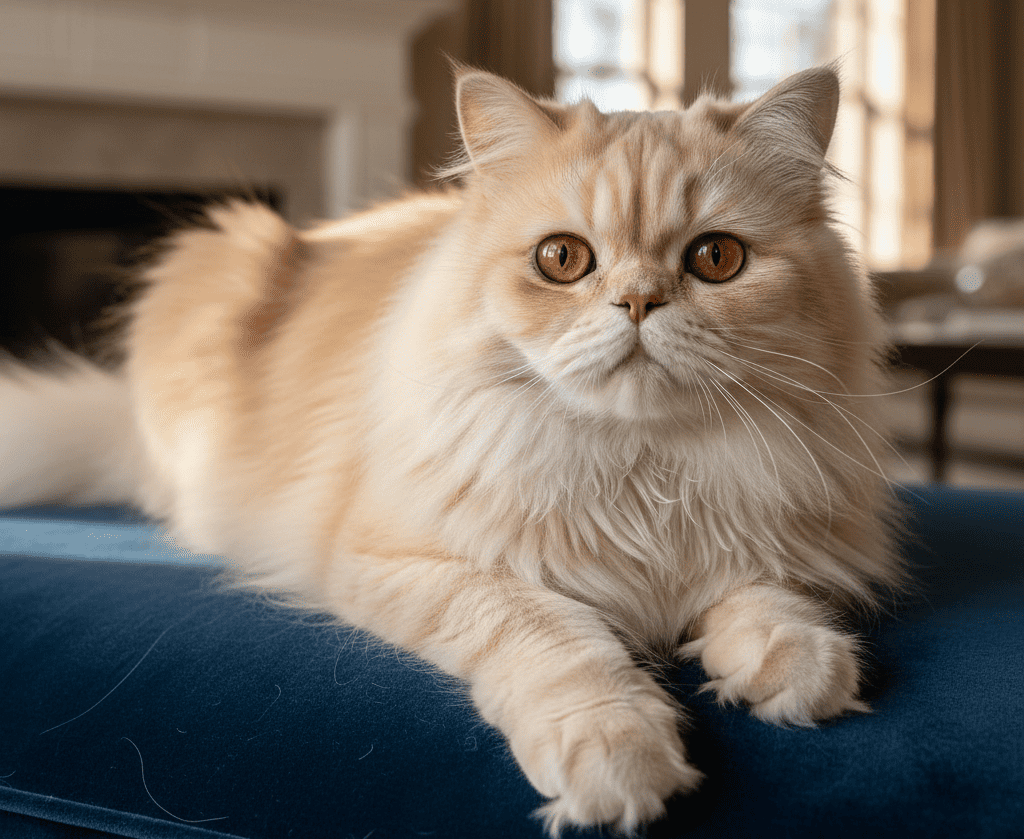
The Persian cat is one of the most popular cat breeds in the world, recognized for its elegant appearance and calm temperament. Its long fur, round facial features and striking eye colors make it stand out. In this article, you will find detailed information about the Persian cat’s history, physical traits, character and living conditions.
History and Origin
The Persian cat, also known as the Farsi cat, has its origins dating back to the seventeenth century. Its ancestors are believed to have been long-haired cats from Italy and Asia. The Ankara cat is considered a close relative, sharing many characteristics, although the Persian cat has denser and more woolly fur. The first recognition in Europe occurred in the seventeenth century when Italian traveler Pietro della Valle brought a cat known as the “sand cat” from Persia. Modern Persian cats trace their lineage to long-haired Asian cats brought to Paris about a century later and then crossed with long-haired Italian cats. The breed gained popularity after capturing the admiration of Queen Victoria and other members of the royal family. Its long, luxurious coat made it a favorite in Europe, especially in long-haired cat shows, and by the late nineteenth century, it was introduced to America where it became a popular breed.
The first recognition in Europe occurred in the seventeenth century when Italian traveler Pietro della Valle brought a cat known as the “sand cat” from Persepolis. This initial introduction marked the beginning of European interest in long-haired cats and garnered significant attention in aristocratic circles. Modern Persian cats trace their lineage to long-haired Asian cats brought to Paris about a century later and subsequently crossed with long-haired Italian cats.
Physical Features
The Persian cat has a short but strong, stocky yet elegant body. Its main physical characteristics include:
Head and Face Structure
The head is remarkably round with a harmonious bone structure. Depending on the type, the cat can have a baby-faced or pekingese-faced appearance. Baby-faced Persian cats have longer and relatively more prominent noses, while pekingese-faced (or Peke-face) ones have extremely flat facial features. The cheeks are full and rounded, giving the face an even rounder appearance. The jaw structure is strong and wide, with a proper and balanced bite.
Nose Characteristics
The nose is short and flat. Some have a slightly protruding nose, while others have a deep indentation creating facial flatness. This characteristic flat nose structure is one of the most distinctive features of the Persian cat and is known as a “brachycephalic” (short skull) structure. The stop (the indentation between nose and forehead) is quite pronounced and is located at or just below eye level. The openness of the nostrils is important for the breed’s health.
Eye Characteristics
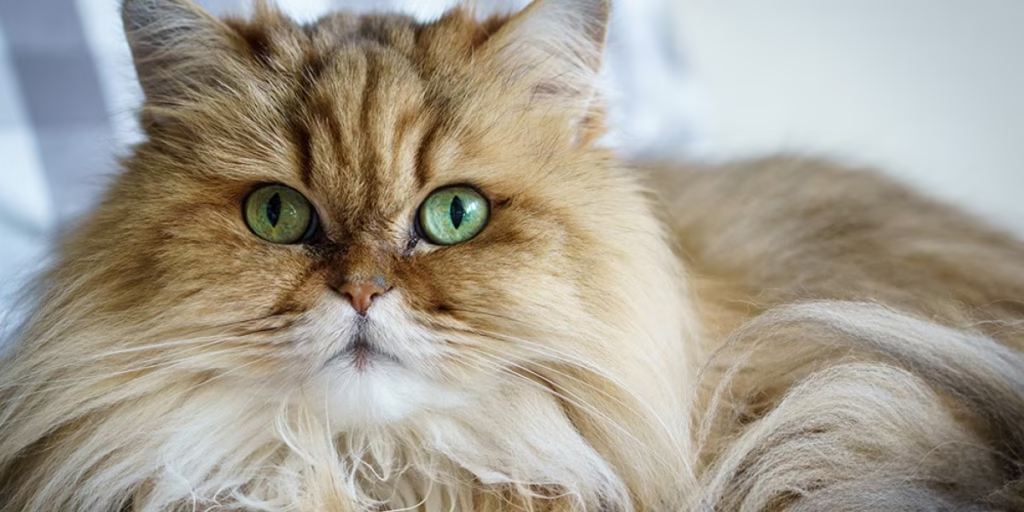
The eyes are large, round, and slightly protruding. Eye colors can be copper, bright blue, green, bluish-green, or hazel. Eye color is usually harmonious with the fur color. For example, white Persian cats typically have blue or copper-colored eyes, while chinchilla varieties commonly have green eyes. The eyes are positioned relatively wide apart from the center of the face, creating the characteristic sweet expression. The eye rims are usually dark-colored, making the eyes even more prominent.
Ear Structure
The ears are small and short, with rounded tips that lean slightly forward and blend with the round shape of the head. The ears are positioned close to the sides of the head and set low, reinforcing the round head appearance. The ear interiors are also covered with long fur, which is called “furnishing.” The size and placement of the ears play an important role in the overall aesthetics of the Persian cat.
Body and Muscle Structure
It has a muscular and compact structure, giving a strong yet elegant appearance. The body is described as “cobby” type – short, compact, and powerful. The chest is broad and deep, with shoulders and hips equal in width. This structure gives the cat a balanced and solid stance on the ground. The bone structure is heavy, contributing to the breed’s stocky appearance.
Leg and Paw Characteristics
The legs are short and thick, paws are rounded and tightly closed, with toes close together. The front paws are larger and more powerful. The paw pads are surrounded by fur and are often completely hidden within the coat. The tail is proportionate to the body but shorter than the legs, covered with thick and dense fur. The tail is usually carried at body level or below.
Fur and Color Variety
The long, dense fur flows elegantly over the body, covering paw pads and even the insides of the ears. In the neck area, there is a dense cluster of fur called a “ruff” (collar). The undercoat is extremely dense, providing the fur’s plush appearance. The guard hairs are fine and silky. The tail fur is especially long and thick, creating a sparkling appearance.
The color variety is tremendous. It can be solid or bicolor, including white, black, gray, blue, cream, blue cream, smoke, mink, blue agate, chocolate, lilac, and mixed patterns. Some special color patterns include:
- Solid Colors: Single color – white, black, blue, red, cream
- Tabby: Striped, spotted, or marble patterned
- Shaded: Shaded colors, including chinchilla and silver types
- Smoke: Light undercoat, dark guard hairs
- Bi-color: Two-color combinations, usually white with other colors
- Colorpoint: Siamese-like patterns, known as Himalayan Persian cat
- Calico and Tortoiseshell: Three-color and mixed patterns
Each color category has its own specific standards and is evaluated separately in competitions.
Size and Weight
The average lifespan of a Persian cat ranges from 11 to 17 years, typically reaching around 15 years with proper care. Males usually weigh 4 to 6 kilograms, females 3 to 5.5 kilograms. Some male Persian cats can reach up to 7 kilograms under ideal conditions. Due to their bone structure, their weight may feel heavier than their appearance suggests. They reach full maturity at 2-3 years of age.
The average lifespan of a Persian cat ranges from 11 to 17 years, with proper care often reaching around 15 years. Males usually weigh 4 to 6 kilograms, and females 3 to 5.5 kilograms.
Character and Behavior
Persian cats are calm, gentle, and highly adaptable. They prefer quiet environments and are not fond of loud or chaotic spaces. They form deep bonds with family members, enjoy sitting on laps, and are affectionate without being demanding.
Persian cats usually get along well with children and other pets. They are intelligent, observant, and quick learners. They are not overly playful; they prefer to rest and watch their surroundings rather than run and jump. They can be left alone for short periods and are generally quiet, making them ideal for peaceful home environments.
Social Interaction
Persian cats are quite social animals but express this in a calm manner. They love being with their families but don’t constantly demand attention. They typically develop a special bond with one or two family members. They can be shy with strangers, and it takes them some time to warm up to people they don’t know. This makes them cautious but not protective.
Communication Style
Their vocal tones are usually soft and melodic meowing. They are not excessively vocal and typically meow only when they really want something (mealtime, attention). Some Persian cats rarely make any sound, while others may regularly “talk” with their owners. They enjoy communicating with eye contact and can express their desires with attentive gazes.
Play and Activity Levels
Adult Persian cats generally have low to moderate activity levels. Kittens are more playful but become calmer as they grow. They enjoy playing with feather balls, fuzzy toys, or lightly moving objects, but avoid overly active play. Providing cat scratching posts and elevated perches is important, but very high climbing is not typical for them.
Intelligence and Learning
Persian cats are quite intelligent but display this intelligence in a calm manner. They quickly learn routines and remember meal times and play times. Simple commands can be taught, but they are generally not as trainable as dogs due to their independent nature. They prefer learning through observation; for example, they can learn how doors open by watching.
Living Conditions
Persian cats adapt well to indoor living and prefer calm and balanced environments. Recommended living conditions include:
Ideal Home Environment
- Providing a quiet and secure indoor environment
- Avoiding extreme heat or cold and maintaining moderate temperatures (ideally 18-24°C)
- Offering human attention, as they may feel bored or uneasy if left alone for long periods
- Providing a comfortable bed, window ledge, or observation spots
- Maintaining routine and stable conditions, avoiding sudden changes
Space Requirements
The ideal living space for Persian cats should include:
Rest Areas: Soft cushions or beds, preferably sunny window sills. Persian cats love warmth and prefer to lounge in sunny spots.
Observation Points: Window sills or low shelves for watching outside. Not too high (1-1.5 meters) climbing areas are ideal.
Private Space: A quiet corner or room where they can be alone. Having a place to retreat when stressed or simply wanting solitude is important.
Temperature Control: Persian cats are sensitive to excessive heat due to their dense fur. Air-conditioned or well-ventilated areas are necessary. They are more resistant to cold but still prefer moderate environments.
Social Needs
Although Persian cats are more tolerant of being alone than other breeds, daily social interaction is important:
- At least 30-60 minutes of quality time per day (petting, brushing, play)
- Should not be left alone for extended periods (8+ hours); working families might consider a second cat
- If there are children, calm and gentle interaction should be taught
- Introduction to other pets should be done slowly and carefully
Frequently Asked Questions
How long do Persian cats live
Persian cats typically live between 11 and 17 years and can often reach around 15 years with proper care
How much do Persian cats weigh
Female Persians usually weigh 3 to 5.5 kilograms while males weigh 4 to 6 kilograms
What colors do Persian cats come in
They can be white, black, gray, blue, cream, blue cream, smoke, mink, blue agate, chocolate, lilac, or bicolor and mixed patterns
Are Persian cats active
Persians are low-energy cats that prefer resting and sitting in laps rather than running or playing actively
Do Persian cats get along with children and other pets
Yes, they are generally friendly and adapt well to families and other pets
Can Persian cats be left alone
Yes, they can tolerate being alone for short periods but they enjoy human attention
Are Persian cats vocal
Persians are quiet and calm and do not enjoy noisy environments
What types of Persian cats exist
There are two main types the doll-faced Persian with a more traditional longer nose and the pekinese-faced Persian with a flat nose
What kind of environment do Persian cats prefer
They prefer calm, secure indoor spaces and do not like sudden changes or chaotic surroundings
Are Persian cats intelligent
Yes, they are attentive and quick learners with a calm and observant nature
Persian cats bring elegance, history, and calmness to any home. If you want to learn more about this breed, feel free to ask questions in the comments.

