

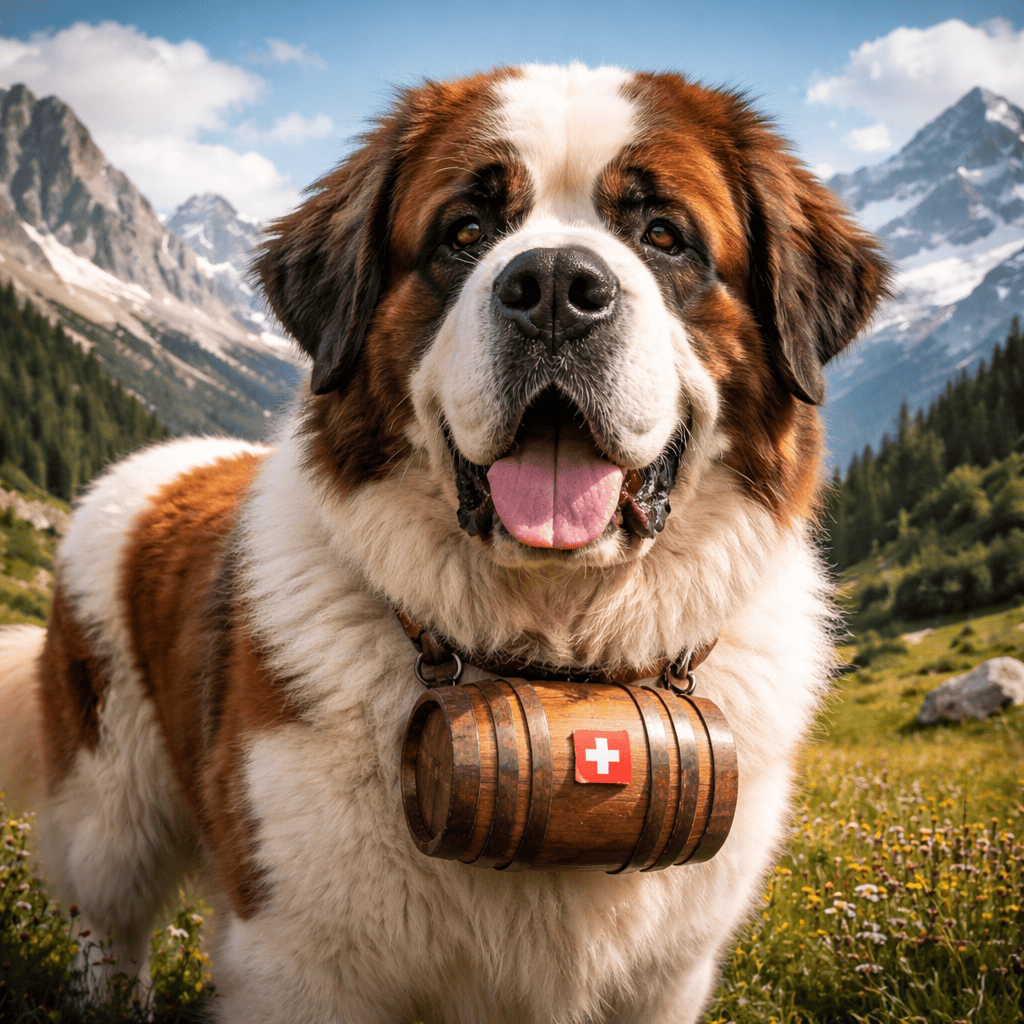
Saint Bernard is a legendary working dog that originated in the snowy peaks of the Swiss Alps. Known worldwide for its massive size calm temperament and heroic rescue stories this breed has earned the nickname Gentle Giant. Saint Bernard dogs are both powerful alpine workers and deeply affectionate family companions with a strong bond to humans.
Origin and History
The history of the Saint Bernard dates back to the 11th century and is closely linked to the Great St Bernard Pass located between Switzerland and Italy.
Monastery Companions
Monks living in a hospice at the mountain pass began breeding large strong dogs to guard the area carry supplies and guide travelers through dangerous snowy terrain. These dogs quickly proved invaluable in extreme alpine conditions.
Alpine Rescue Legends
Saint Bernards became famous for their ability to locate travelers buried under snowstorms. Their strong sense of smell endurance and intelligence made them natural rescue dogs.
The most legendary Saint Bernard Barry is credited with saving more than 40 people between 1800 and 1814 and remains a national symbol of heroism in Switzerland.
Development of the Modern Breed
In the mid 19th century structured breeding programs were established and official standards were recorded. This helped define the modern Saint Bernard in terms of size coat and temperament.
Physical Characteristics
Saint Bernard is instantly recognizable due to its enormous body structure and expressive face.
Size and Weight
Males typically weigh between 64 and 82 kilograms while females range from 54 to 64 kilograms. Height usually varies from 65 to 90 centimeters depending on gender.
Coat Types
There are two accepted coat varieties
Short coat which is dense smooth and close to the body
Long coat which is slightly wavy and offers extra insulation
Both coat types are thick weather resistant and designed for cold climates.
Color Patterns
Common colors include white with red patches brown markings or brindle tones. A dark facial mask is highly characteristic and desirable.
Temperament and Personality
Despite their imposing appearance Saint Bernards are among the calmest and most gentle dog breeds.
Family Oriented Nature
They are extremely affectionate loyal and patient especially with children. Their tolerant personality has earned them a reputation as a natural family guardian and companion.
Intelligence and Trainability
Saint Bernards are intelligent and eager to please but they can show stubborn tendencies. Early socialization and consistent training are essential due to their sheer size rather than behavioral issues.
Emotional Sensitivity
This breed thrives on human interaction and does not do well when isolated for long periods. They form deep emotional bonds with their families.
Living Conditions and Daily Life
Owning a Saint Bernard requires thoughtful planning and commitment.
Space Requirements
Due to their large size they are best suited for homes with ample indoor space. A yard is beneficial but not mandatory if daily outdoor time is provided.
Activity Level
They have moderate energy needs. Daily walks lasting 30 to 60 minutes are sufficient to keep them physically and mentally balanced.
Climate Adaptation
Saint Bernards are highly sensitive to heat. Their thick coat makes them vulnerable in warm climates so cool shaded environments are essential.
Cultural Impact and Fun Facts
The Barrel Myth
The iconic image of Saint Bernards carrying small barrels around their necks is a myth created by 19th century paintings. There is no historical evidence that such barrels were used in real rescue missions.
Pop Culture Fame
The breed gained massive global popularity after appearing in the movie Beethoven which showcased their lovable clumsy and gentle personality.
Frequently Asked Questions About Saint Bernard Breed
Is Saint Bernard aggressive
No this breed is known for its calm patient and friendly temperament.
Is Saint Bernard suitable for first time dog owners
They can be suitable if the owner is prepared for their size training needs and maintenance.
Can Saint Bernard live indoors
Yes they adapt well to indoor life as long as they have enough space and regular outdoor activity.
Are Saint Bernards good with children
Yes they are among the most child friendly large dog breeds when properly socialized.

